Your Go-To for Complete Home Solutions and Trusted Excellence
Your Go-To for Complete Home Solutions and Trusted Excellence
HVAC

By Ar. Daisy,
May 08, 2026


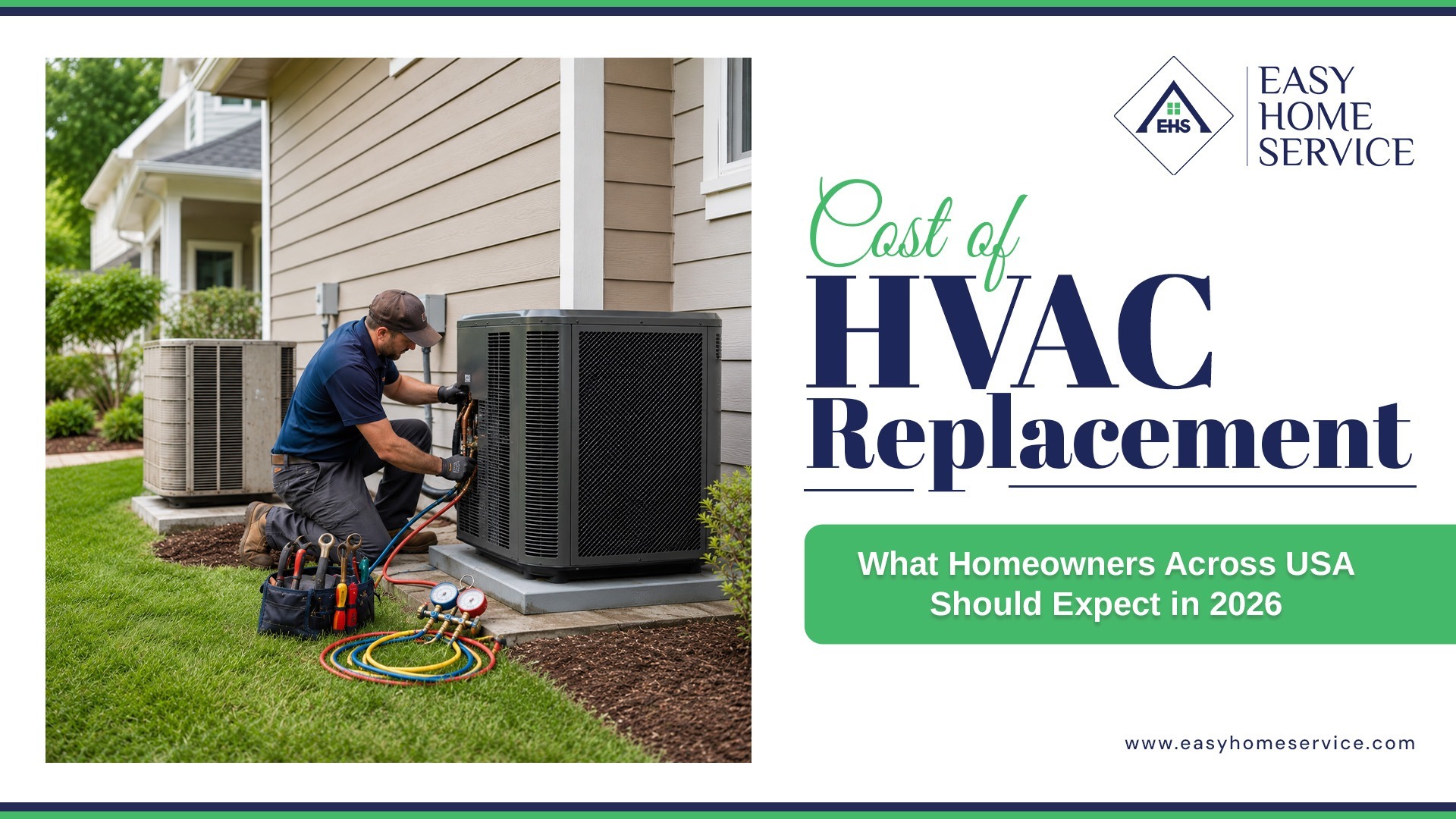
If your home feels harder to heat or cool, your energy bills keep increasing or your system constantly breaks down, you are probably wondering about the real cost of HVAC replacement in 2026. If you are looking to know that how expensive HVAC replacement can get.
This guide will show you how much homeowners have to pay in the USA, including HVAC system replacement, furnace replacement, AC replacement and duct installation. It also breaks down costs by home size, state, brand and system type while helping homeowners understand what actually affects pricing.
Easy Home Service helps connect homeowners with trusted HVAC professionals for inspections, replacements and energy-efficient upgrades. This improve comfort and reduce long-term operating costs.
The cost of replacing HVAC systems has steadily increased over the past few years. It is maily due to the factors like inflation, labor shortages, stricter efficiency regulations and rising material prices. The current federal standards mandate many HVAC systems to have a higher SEER2 rating, enhancing energy efficiency but also making installations expensive.
According to Carrier’s HVAC Replacement Cost Guide, system size, climate, efficiency level, ductwork condition and labor complexity are major factors influencing the final HVAC replacement price.
Likewise, according to the Bryant HVAC Pricing Guide, installing variable speed systems and high-efficiency heat pumps involves higher initial expenses but may result in energy savings over time.
Many homeowners today are replacing systems not only because of breakdowns, but also to lower utility bills and improve indoor air quality.
The average cost of HVAC replacement in the United States can range anywhere from $5,000 to $18,000, based on the HVAC system type and installation complexity level.
Basic central air conditioning system replacement will cost about $4,500-$8,000, whereas replacing both air conditioning and furnaces together could cost $8,000-$16,000 or more.
According to L.M. Wilson's HVAC Replacement Pricing, homeowners replacing complete heating and cooling systems should also budget for potential ductwork modifications, thermostat upgrades and electrical improvements.
Average national replacement estimates include:
| HVAC System Type | Average Installed Cost |
| Furnace replacement | $3,500 – $7,500 |
| Central AC replacement | $4,500 – $8,500 |
| Heat pump replacement | $6,000 – $14,000 |
| Air conditioner and furnace replacement cost | $8,000 – $18,000 |
| Full ductwork replacement | $2,000 – $8,000 |
These estimates vary depending on region, labor rates and equipment quality.
One of the most searched homeowner questions is:
“How much does a new HVAC system cost for a 2000 square-foot home in 2025 or 2026?”
For a typical 2,000-square-foot American home, the average cost of replacing HVAC systems usually falls between $9,000 and $17,000.
In warmer regions, cooling demands may be greater, necessitating larger units and additional expenses. In colder locations, like northern states, greater furnace efficiencies may be required. Some homes may need additional improvements, such as better insulation or older ducting, to enhance comfort and efficiency, driving up the total cost.
For example:
1. Entry-level HVAC system: $7,000 - $10,000
2. Mid-range high-efficiency system: $10,000 - $15,000
3. Premium variable-speed system: $15,000 - $22,000+
The final HVAC replacement price depends heavily on energy efficiency, home design and installation difficulty.
State-Wise HVAC Replacement Cost Factors
HVAC replacement pricing differs significantly across the United States.
Texas homeowners often spend more on cooling-focused systems because of long summers and extreme temperatures. Since Texas sees high temperatures, many residents opt for cooling systems that are highly effective. A complete heating and cooling replacement cost in Texas commonly ranges between $8,000 and $16,000.
Due to its humid climate, there is a significant reliance on air conditioners. High-efficiency systems are common, with replacement cost in Florida State ranging from $7,500 to $15,000 and replacement costs generally range from $7,500 to $15,000.
California is one of the states where you can expect high prices for installing HVACs due to expensive labor costs and regulations on energy consumption. HVAC replacement cost in California can be as high as $10,000-$20,000 or even higher. Many homeowners spend $10,000 to $20,000+ for a complete system replacement.
Michigan, Illinois, Ohio and New York need both heating and cooling equipment. Projects including the replacement of both units cost about $9,000 to $18,000. Combined furnace and AC replacement projects frequently range between $9,000 and $18,000.
HVAC brand selection has a major impact on replacement cost.
Brands like Goodman and Amana are usually more affordable and often cost between $5,000 and $10,000 installed. They are budget friendly and more suited for homes.
Mid-Range HVAC Brands
There are many brands that come in this range. Rheem, Ruud and Armstrong Air systems typically range between $7,000 and $14,000.
Premium HVAC Brands
Carrier, Lennox and Trane systems are often priced between $10,000 and $20,000+, especially when choosing high-efficiency variable-speed models.
Premium systems usually offer:
1. Better efficiency ratings
2. Quieter operation
3. Extended warranties
4. Compatibility with smart thermostats
5. Excellent humidity control
Many homeowners focus only on equipment pricing, but labor and home conditions significantly affect the cost for HVAC replacement.
Large houses will require bigger capacity devices and better ventilation and more airflow distribution. Thus there will be a greater need for HVAC system in place.
Old or leaking ans faulty ducts may need replacement, adding thousands to the project. Thus it is essential to keep a check for this.
Higher SEER2 air conditioners and high-AFUE furnaces cost more upfront but save money long-term. They offer more durability and efficiency.
Installation Complexity
Tight attics, crawlspaces, older homes and permit requirements increase labor costs. So, keeping a track of these is essential.
Climate
Homes in extreme climates often require larger or more advanced systems. Extreme heat or cold can affect system performance and integrity.
Do You Know?
Heating and cooling account for roughly 50% of the average home’s energy usage in the United States. Replacing older HVAC systems with modern high-efficiency models can significantly reduce monthly utility bills.
A great number of homeowners keep repairing their systems for many years after replacement becomes a better option financially.
Warning signs include:
1. Frequent breakdowns
3. Uneven room temperatures
4. Poor airflow
5. Loud operation
6. Increased noise
7. Refrigerant leaks
8. Furnace is 20+ years old
9. Air conditioner is 15+ years old
If repair costs approach 30–40% of replacement cost, most HVAC experts recommend replacement.
In nearly every case, yes.
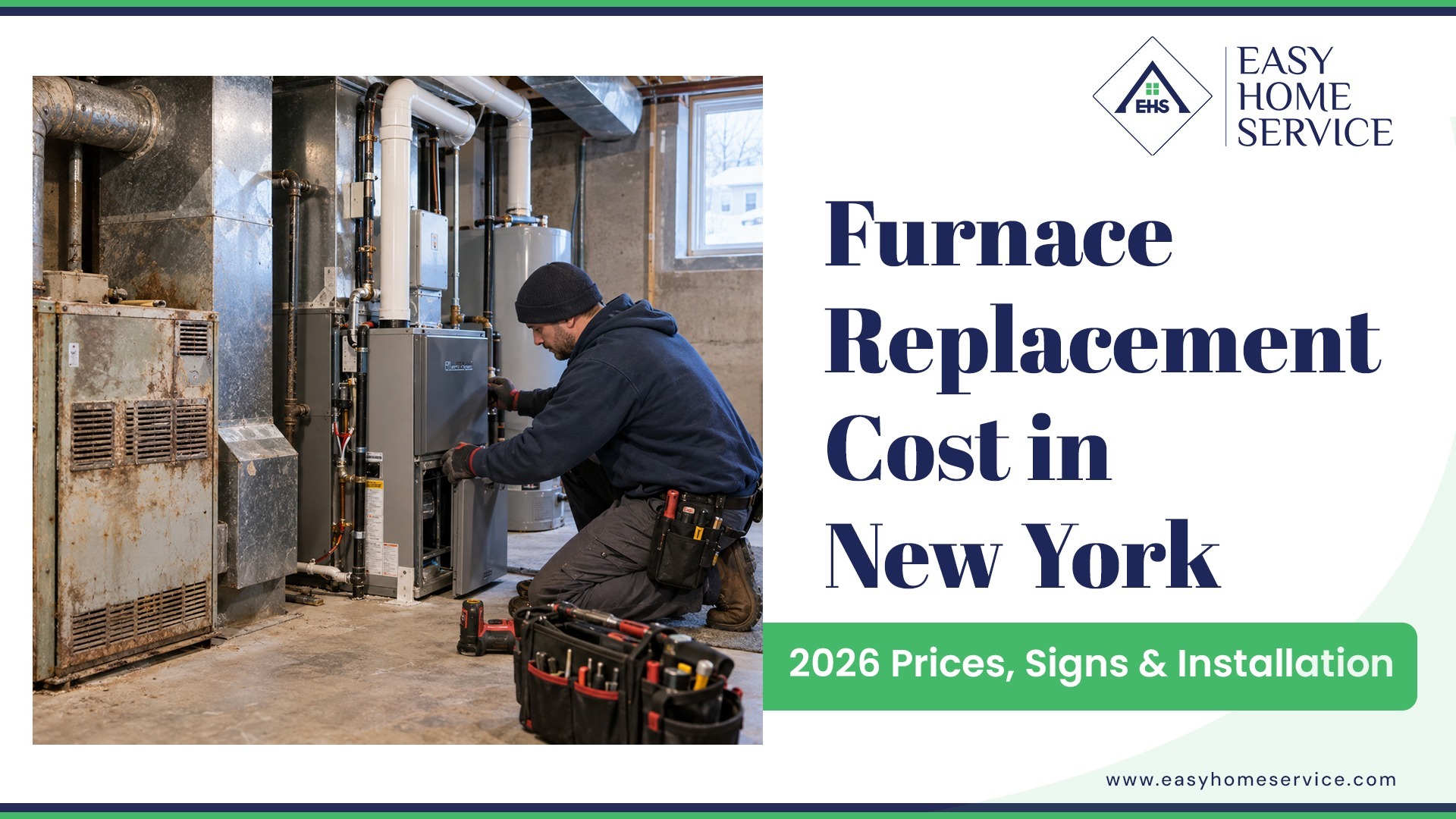
A 30-year-old furnace is far less efficient than modern systems and can dramatically increase energy bills. Older furnaces may operate at efficiency levels below 70%, while modern high-efficiency furnaces can exceed 95% AFUE.
Replacing an outdated furnace often improves:
1. Improved comfort
2. Higher efficiency
3. Better indoor air quality
4. Safer operation
5. Consistent heating
One thing that is important to know is what homeowners should realistically expect during the installation process.
A complete HVAC replacement usually includes:
1. Removal of old equipment
2. Ductwork inspection
3. Refrigerant line replacement
4. Electrical testing
5. Thermostat upgrades
6. System sizing calculations
7. Airflow balancing
8. Final efficiency testing
Most installations take between 1 and 3 days, depending on complexity.
If major ductwork or insulation upgrades are required, installation may take longer.
Simple AC or furnace replacements may take only one day, while complete system replacements with ductwork modifications can require several days. Professional installation is important because incorrect HVAC installation can cause your new system to:
1. Waste energy
2. Wear out faster
3. Cause uneven temperatures
4. Increase humidity problems
Many online guides underestimate real replacement expenses.
Additional costs may include:
1. Permit fees
2. Smart thermostat installation
3. Electrical upgrades
4. Attic insulation improvements
5. Duct sealing
6. Indoor air quality systems
7. Refrigerant disposal fees
These and other hidden costs can significantly add to the cost of your replacement HVAC system.
Choosing the right HVAC system can feel overwhelming because every home has different heating and cooling needs. Selecting the correct system for your house can be challenging since everyone has their own heating and cooling needs.
Easy Home Service helps homeowners:
1. Connect with trusted local HVAC contractors
2. Schedule inspections and estimates
3. Understand system efficiency ratings
4. Find energy-efficient solutions for long-term savings
Whether you need a complete heating and cooling replacement or simply want professional guidance on replacement HVAC costs, Easy Home Service helps simplify the process.
Connect with Easy Home Service today to compare trusted HVAC replacement professionals and find the right system for your home and budget.
An aging HVAC system can quietly increase your utility bills every month while reducing comfort throughout your home.
Connect with Easy Home Service today to compare trusted HVAC replacement professionals and find the right system for your home and budget.
Frequently Asked Questions
Most homeowners spend between $5,000 and $18,000 depending on system size, efficiency and installation complexity.
How much does a new HVAC system cost for a 2000 square-foot home in 2025?
The average cost ranges from $9,000 to $17,000 for a complete heating and cooling system replacement.
Air conditioners typically last 12–18 years, while furnaces often last 15–25 years with proper maintenance.
Most HVAC systems should be evaluated for replacement after 10–20 years depending on condition and repair frequency.
Yes. Older furnaces are far less efficient and more expensive to operate compared to modern systems.
Most residential HVAC replacements take between 1 and 3 days.
Yes. Energy-efficient HVAC systems are attractive to buyers and can improve resale value.
In many cases, yes. Replacing both systems together improves compatibility and efficiency.
Suggested Reads
Find Top Rated Service Providers
We help you find top service providers and compare quotes.










Leave a Comment: