Your Go-To for Complete Home Solutions and Trusted Excellence
Your Go-To for Complete Home Solutions and Trusted Excellence
HVAC

By Ar. Daisy,
February 09, 2026


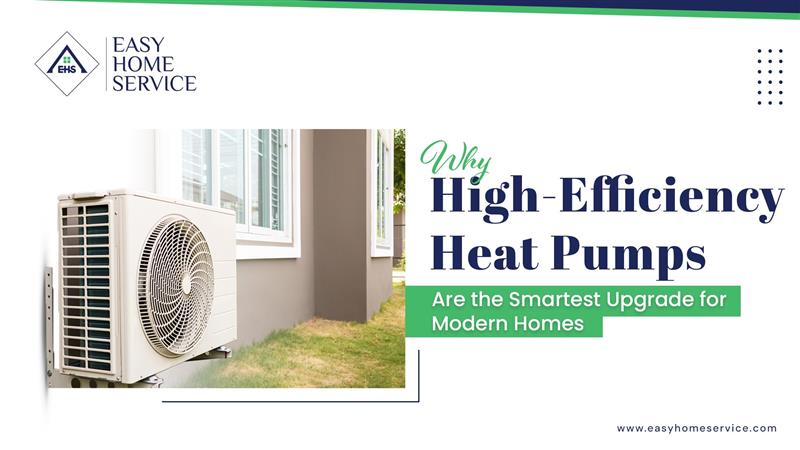
Home heating and cooling are no longer just about comfort- they’re about energy efficiency, long-term savings, and sustainability. As electricity grids modernize and energy costs fluctuate, high-efficiency heat pumps have emerged as one of the smartest upgrades for modern homes. Compared to the conventional HVAC systems, which create heat, heat pumps move heat, thus making them much more efficient for heating and cooling.
In this guide, we explain how heat pumps work, why high-efficiency heat pumps are gaining popularity across the U.S., how they compare to AC systems, and whether they’re the right choice for your home. Additionally, you will know about the system’s components, lifespan, common issues, and how Easy Home Service assists homeowners in finding reliable HVAC professionals.
A heat pump for home use is an all-electric system that transfers heat rather than generating it. In summer, it removes heat from inside your home and releases it outdoors. It can extract heat from outdoor air (even if it's cold) during winter and bring it inside.
This process relies on refrigeration technology similar to an air conditioner, but works in both directions.
Reference: U.S. Department of Energy - Heat Pump Basics
As a homeowner, understanding these key components can help you recognize why high-performance heat pumps are so effective:
Together, these components allow heat pumps for home heating and cooling to deliver year-round comfort with lower energy consumption.
Unlike traditional furnaces, which produce heat by burning fuel and thereby lose energy, high-efficiency electric heat pumps can provide as much as 3-4 times the energy that they consume, according to the U.S. Department of Energy.
That’s why high-efficiency heat pumps for residential systems consistently outperform gas furnaces and standard AC units in total energy savings.
Heat Pumps for Home Heating and Cooling: One System, Two Jobs
One major advantage of a home heat pump system is that it replaces both:
Definitely, Heat pumps include full air conditioning capability. When set to cooling mode, they function identically to a normal AC system and can even be more efficient at times.
This dual functionality reduces:
A traditional AC only cools. A heat pump cools and heats. Heat pumps used along with electric resistance backup or/and in mild climates, are typically the better long-term financial venture.
Yes, in most homes, you can replace your AC with a heat pump without major ductwork changes. A lot of modern heat pumps are made to be compatible with the existing HVAC system, so you don't have to change it.
Consequently, upgrading to high-efficiency heat pumps is a feasible option for a homeowner who wants to improve the efficiency of the system without replacing the whole system.
Compare options and connect with local professionals today.
Modern high-performance heat pumps are engineered for cold climates and can operate efficiently even when outdoor temperatures drop below freezing.
Cold-climate heat pumps:
According to the Department of Energy, cold-climate heat pumps can reduce heating electricity use by up to 50% compared to electric resistance heating.
Indeed. The combination of highly efficient electric heat pumps and solar energy systems works very well.
The benefits include:
Many homeowners use solar panels to offset the electricity needed to run heat pumps, creating an ultra-efficient, low-carbon home heating and cooling solution.
Heat pumps don’t “create” heat- they move it. That’s why they can deliver 300%–400% efficiency, far exceeding traditional heating systems.
The most common heat pump issues include:
Routine maintenance significantly reduces these issues and extends system life.
A heat pump that is well-maintained and in good condition usually lasts somewhere between 15 and 20 years, which is similar to or even longer than the lifespan of many traditional HVAC systems.
According to ENERGY STAR and the EPA:
This makes high-efficiency heat pumps residential systems one of the most cost-effective HVAC upgrades available today.
Easy Home Service connects homeowners with trusted and competent HVAC professionals across the U.S. who specialize in:
We help homeowners:
Get expert guidance on high-efficiency heat pumps through Easy Home Service.
High-efficiency heat pumps are no longer a future technology—they’re a proven, reliable solution for modern homes seeking lower energy bills, year-round comfort, and reduced environmental impact. Whether you’re replacing an aging AC, upgrading an inefficient furnace, or building a smarter home, heat pumps for home heating and cooling offer unmatched value.
When you are ready to get a high-efficiency heat pump, Easy Home Service will be happy to assist you in finding a reliable HVAC professional so that you can confidently carry out your upgrade.
A heat pump transfers heat rather than producing it. It moves heat from the air or ground outside into your home during winter and reverses the process in summer to cool your home efficiently.
Heat pumps are better long-term because they provide both heating and cooling in one system and operate with much higher energy efficiency than traditional air conditioners.
Yes, in most homes a heat pump can replace an existing AC system without major ductwork changes. It upgrades your system to provide both cooling and heating.
The four main components are the compressor, condenser coil, evaporator coil, and expansion valve. These work together to move heat efficiently.
Yes, heat pumps pair extremely well with solar systems. Solar panels can power the heat pump, reducing electricity bills and your carbon footprint.
Refrigerant leaks and poor maintenance are the most common issues. Regular servicing keeps the system efficient and reliable.
With proper maintenance, most heat pumps last between 15 and 20 years.
Yes. Heat pumps provide full air conditioning in summer and efficient heating in winter — all in one system.
Suggested Reads
Find Top Rated Service Providers
We help you find top service providers and compare quotes.









Leave a Comment: