Your Go-To for Complete Home Solutions and Trusted Excellence
Your Go-To for Complete Home Solutions and Trusted Excellence
HVAC

By Ar. Daisy,,
February 11, 2026


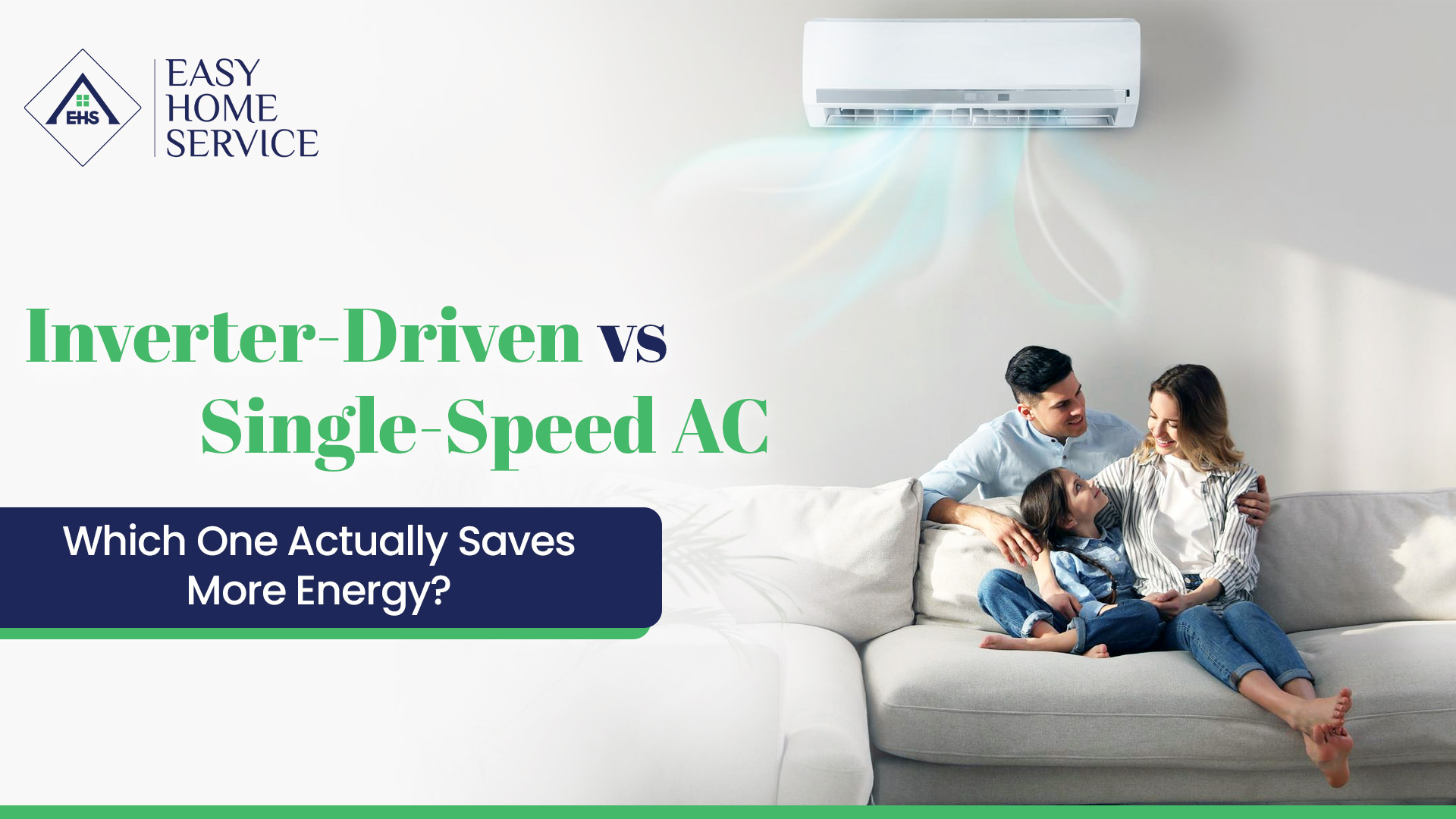
Choosing between a single-speed AC and an inverter AC is no longer just about upfront price—it’s about long-term energy savings, comfort, and how well the system matches your local climate. Inverter AC units are generally sold as energy-saving devices, but are they always the right choice for U.S. homes? This guide breaks down how inverter ACs and non-inverter (single-speed) systems work, compares real-world electricity usage, explains inverter AC pricing, and helps you decide which system delivers the best value based on climate, home size, and usage patterns. This blog will help you in making an informed HVAC decision, whether you reside in a hot Southern state or a milder Northern area.
A single-speed AC, also known as a fixed-speed or normal AC, operates in a simple on-off cycle. So when the temperature in your home goes up beyond the thermostat setting, the compressor will turn on and run at full capacity. When the temperature that you want is reached, the system stops running completely.
Single-speed ACs have been the standard in many U.S. homes for decades due to their lower upfront cost and simple design.
An inverter AC unit uses variable-speed compressor technology. The compressor doesn't turn on and off, but instead, the compressor varies its speed according to the cooling request. So the system can keep the indoor temperature stable and use less electricity at the same time.
Modern inverter AC units are widely used in high-efficiency HVAC systems and are increasingly popular across the U.S.
This difference in operation is what directly impacts energy savings.
Compare energy-efficient AC options and installation costs today.
Yes, in most real-life situations, inverter ACs use 20- 40% less electricity than single-speed ACs, especially in the case of families that need cooling most of the time.
However, energy savings depend on usage patterns, climate, insulation, and system sizing.
The U.S. has different climate zones, and this is an important factor to consider while deciding on the type of AC technology.
In hot and humid regions, inverter ACs provide both energy efficiency and superior comfort.
Important: Although inverter ACs have a higher upfront price, the energy savings usually help you earn back the difference within 3-5 years, particularly if you use the AC a lot.
Inverter ACs hardly let the temperature fluctuate, so it stays quite constant. Hence, hot and cold cycles are reduced, resulting in increased comfort.
Single-speed ACs cool quickly but can feel less comfortable due to frequent cycling.
When properly maintained, inverter ACs often last longer because:
Nevertheless, inverter systems must be installed by a professional HVAC expert and serviced regularly so that the sensitive electronics are protected.
Let us explore which one of the two air conditioners is better.
✔AC runs daily for long hours
✔Energy savings matter
✔Comfort and noise reduction are priorities
✔You plan to stay in the home long-term
A traditional single-speed AC can draw up to 3 times as much power during startup as during normal operation. The spike of energy consumption, in this case, is totally eliminated by inverter ACs.
Inverter ACs typically achieve:
Higher SEER ratings generally mean lower utility bills, especially during hot summer months.
We at Easy Home Service help homeowners find the best, trusted HVAC professionals in their USA state who will assist you in selecting the right cooling system based on:n:
We make it easier to compare inverter AC vs non-inverter options with expert guidance, transparent pricing, and professional installation support.
Get expert recommendations from local HVAC professionals through Easy Home Service.
When comparing inverter-driven vs single-speed AC systems, inverter technology clearly offers superior energy savings, comfort, and long-term value for most U.S. households, especially in warmer regions. Although the upfront cost of an inverter unit could be higher, the decrease in electricity expenses and efficient performance generally make it a smart investment.
If you are thinking about replacing your old AC unit or installing a new one, Easy Home Service is your go-to place for a solid and well-informed decision. We will set the right expectations and connect you to HVAC service providers who care about your comfort needs and preferences.
Inverter ACs are best if your goal is energy savings and comfort in the long run, whereas non-inverter ACs are good for low usage or budget-conscious households.
They do, inverter ACs can reduce your power consumption by 20-40% compared to single-speed ACs.
However, the advantages are much more significant in areas where the cooling season is long.
Inverter ACs often last longer due to reduced mechanical stress.
Inverter ACs help maintain a comfortable environment and are energy efficient; fixed-speed ACs have a lower initial cost.
Repair costs can be higher due to advanced electronics, but fewer breakdowns offset this over time.
Suggested Reads
Find Top Rated Service Providers
We help you find top service providers and compare quotes.







Leave a Comment: