Your Go-To for Complete Home Solutions and Trusted Excellence
Your Go-To for Complete Home Solutions and Trusted Excellence
HVAC

By Ar. Daisy,
October 27, 2026


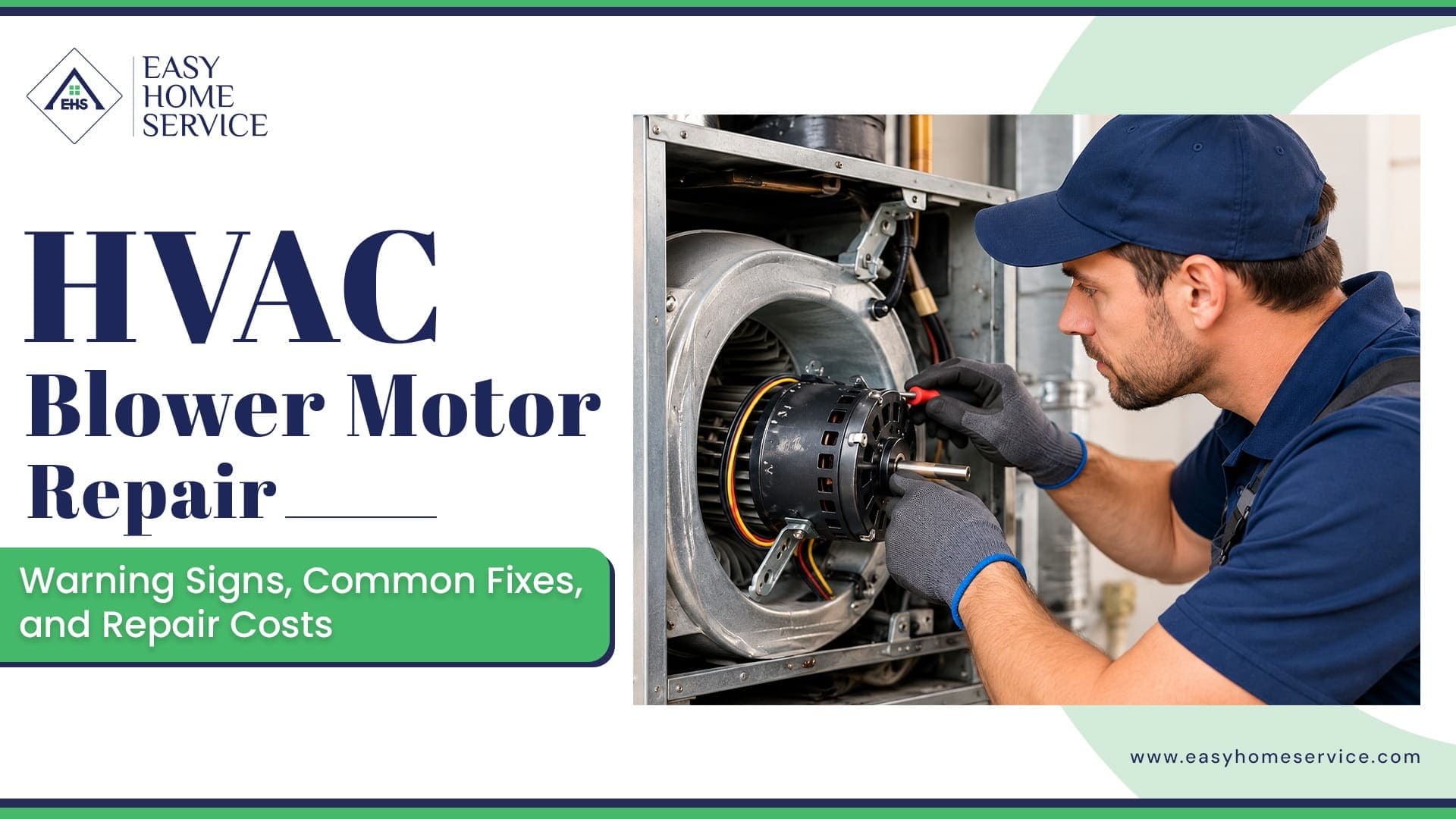
When an HVAC system runs but little or no air comes through the vents, a faulty blower motor could be the cause. However, a dirty air filter, failed capacitor, electrical problem, or restricted airflow can produce similar symptoms.
HVAC blower motor repair costs depend on the failed component, motor type, labor, and equipment accessibility. Repairing a related component may cost less than replacing the motor, while a complete replacement can cost several hundred dollars or more.
This guide will teach you how to identify blower motor issues, safely troubleshoot typical symptoms, comprehend repair and replacement prices, and determine when to contact an HVAC specialist.
The blower motor rotates the fan, also known as the blower wheel, which pushes air past your heat exchanger or evaporator coil and out via the ducting. Every central heating boiler has one, as does the air handler that connects to a central air conditioning or heating system. It operates anytime you heat, chill, or turn on the thermostat fan.
Because it works so often, it wears out sooner than many other parts. Dust, heat, and electrical strain all add up over the years. That is why blower motor problems show up in every climate, even though the season they appear in changes.
It also helps to know which type of motor you have, since it affects both repair options and cost:
|
Motor type |
How it works |
What it means for repair |
|
PSC (permanent split capacitor) |
Single-speed, relies on a run capacitor to start and keep spinning |
Older and cheaper to replace, and capacitor failure is common |
|
ECM (electronically commutated) |
Variable-speed, with a built-in control module |
More efficient and more expensive, and the module can fail separately from the motor |
Blower motors rarely fail without warning. Most give you hints for weeks or even months. Catching them early often means a smaller bill.
|
Symptom |
Most likely cause |
Typical fix |
DIY friendly? |
|
Weak airflow from vents |
Dirty filter, clogged blower wheel, or a failing motor |
Replace the filter, clean the wheel, test the motor |
Yes, for filter and wheel |
|
Squealing |
Dry or worn bearings |
Oil an older motor with oil ports, or replace the motor |
Sometimes |
|
Grinding |
Bearings close to seizing |
Motor replacement |
No |
|
Rattling or banging |
Loose or damaged blower wheel |
Tighten or replace the wheel |
No |
|
Humming but not spinning |
Bad capacitor or seized motor |
Capacitor or motor replacement |
No |
|
Motor runs but no air |
Wheel loose on the shaft, or blocked ducts |
Reseat or replace the wheel, clear the airflow |
Partly |
|
HVAC blower motor not turning on |
No power, tripped safety switch, bad capacitor, or dead motor |
Work through the checklist below |
Partly |
|
Blower runs nonstop |
Fan set to On, stuck relay, or control board fault |
Set the fan to Auto, then call a pro if it continues |
Partly |
|
Breaker keeps tripping |
Overheating motor or shorted wiring |
Professional diagnosis |
No |
|
Burning smell |
Overheated motor or damaged wiring |
Shut the system off and call a pro |
No |
A bearing, belt, or wheel issue is typically the cause of a noisy blower motor. Rattling or pounding indicates a loose or damaged wheel, grinding indicates bearings nearing the end of their life, and squealing indicates dry or worn bearings. Because a seized motor might overheat and trip the breaker, grinding requires prompt treatment.
If the blower motor runs but no air comes out, the wheel may be loose on the shaft or cracked, or something may be blocking the airflow. Check for a severely clogged filter, closed vents, or collapsed ductwork. If the motor spins and the vents stay nearly dead, a technician can inspect the wheel in minutes.
Blower motor capacitor problems cause the classic hum without a spin. The capacitor gives the motor the jolt it needs to start, and a bulging top or oily residue points to failure. The part is inexpensive, but it stores a charge, so have a professional replace it.
Before you assume the motor is dead, spend ten minutes on the basics. Plenty of service calls end with a simple fix that cost the homeowner nothing.
Thermostat settings. Make sure it's set to Heat, Cool, or Auto, and that the batteries are fresh if it uses them.
Air filter. A clogged filter makes the motor work harder and can trigger safety shutoffs. If yours looks gray and packed, replace it.
Breaker and furnace switch. Furnaces usually have a wall switch that looks like a regular light switch. It gets flipped off by accident more often than you'd think. Check the breaker too.
Blower door panel. Most units have a safety switch that cuts power if the panel isn't seated correctly. Reseat it firmly and try again.
Condensate float switch. If you have an air handler and the drain pan is full, a float switch may be shutting the system down. This is common during humid summers.
If all of that checks out and the blower still won't move, it's time to dig a little deeper.
A quick safety note first. Always turn the system off at the thermostat, flip the furnace switch, and shut off the breaker before you open any panel. Then wait a few minutes. Electrical components inside the unit can hold a charge even after the power is off.
Over time, dust accumulates on the fan blades, causing the wheel to become unbalanced. This results in weak airflow, noise, and vibration. After removing the panel, you can usually take the blower unit out and hoover and clean the blades. One of the most frequent and inexpensive issues to repair is a filthy wheel.
There are occasionally tiny oil ports near each end of older motors. If yours does, you can stop screaming bearings with a few drops of non-detergent SAE 20 motor oil. Don't try to force it because the majority of contemporary motors are sealed and cannot be lubricated. Ignore this step if there are no ports.
Check for loose connectors, melted insulation, and burnt terminals. A loose connection can resemble a dead motor. If you notice burn marks, stop and call a professional.
The capacitor gives the motor the jolt it needs to start. A bulging top, leaking oil, or visible damage tells you it has failed. Replacing a capacitor is one of the most common blower motor repairs, and the part itself is cheap. The catch is that capacitors store a dangerous charge. If you aren't trained to discharge one safely, leave this to a technician.
Cleaning, changing filters, and performing basic inspections are tasks most homeowners can handle. However, capacitor replacement, motor swaps, ECM module diagnosis, and live electrical testing should be handled by an HVAC professional. Improper repairs can damage the motor, void the warranty, or cause injury.
Repair the blower motor when the problem is minor, such as a capacitor, wiring, or a dirty wheel, and the motor is under about 10 years old. Replace it when the motor is old, the bearings are failing, or the repair would cost more than roughly half the price of a new motor.
|
Situation |
Better choice |
Why |
|
Bad capacitor on a motor under 10 years old |
Repair |
Low-cost part, and the motor has years left |
|
Dirty wheel or loose wiring |
Repair |
Cleaning or reconnecting restores normal airflow |
|
Grinding bearings or a seized motor |
Replace |
Worn bearings are rarely worth repairing on a sealed motor |
|
Motor 12 to 15 years old, with a repair over half the cost of a new one |
Replace |
Another failure is likely soon |
|
ECM control module failed, motor still good |
Ask about repair |
Some modules are sold separately, so confirm before you buy a full motor |
|
Furnace or AC 15 years or older with other problems |
Consider a system replacement |
Money put into the motor may not pay off |
|
System or motor still under warranty |
Check coverage first |
Parts or labor may be covered |
A good technician will explain why they recommend one option over the other. If someone pushes a full system replacement without testing the motor first, get a second opinion.
Most replacements follow the same four steps and often take a few hours:
Most homeowners pay $150 to $400 for a capacitor repair, $450 to $900 to replace a standard PSC motor, and $900 to $2,000 or more for an ECM or variable-speed motor. Prices shift with your region, brand, and how hard the unit is to reach.
|
Repair or service |
Typical cost range |
|
Blower wheel cleaning |
$100 to $250 |
|
Capacitor replacement |
$150 to $400 |
|
Wiring, relay, or control repair |
$150 to $600 |
|
PSC blower motor replacement |
$450 to $900 |
|
ECM or variable-speed motor replacement |
$900 to $2,000 or more |
A diagnostic or service call often adds $75 to $200, though many companies credit it toward the repair if you go ahead with the work.
Labor usually runs $75 to $200 per hour, and your total depends on how long the job takes. Emergency visits, nights, and weekends cost more. A unit in a tight attic or crawl space can add time as well.
These numbers are general estimates, not quotes. Always ask for a written, itemized estimate before approving the work.
Most blower motor failures are linked to heat, dust, restricted airflow, or normal witemisedar and tear. Routine maintenance can help reduce unnecessary strain and keep your HVAC system running reliably.
Furnace blower motor maintenance is particularly important in fall, before you start relying on heat daily. Air handlers should also be checked in spring to help prepare for the cooling season.
Most blower motors last somewhere between 10 and 20 years. PSC motors tend to land on the shorter end, while well-maintained ECM motors often last longer. Hard use, dirty filters, and high heat can cut that number down. If your motor is approaching the 15-year mark and starting to act up, it's wise to budget for a replacement.
Where you live shapes which blower motor problems you're likely to see.
Delaware, Idaho, and Michigan. Long, cold winters put furnaces under heavy demand. In places like Wilmington, Boise, and Detroit, a furnace blower motor not working in January is more than an inconvenience. It can leave you without heat on the coldest night of the year. If you notice weak airflow or odd noises in the fall, get the motor checked before the first hard freeze.
Arkansas and Arizona. Hot weather means the AC runs for months. In Little Rock, humidity adds strain and increases the chance of drain and float switch issues in the air handler. In Phoenix, extreme heat and dust push blower motors close to nonstop use through summer. Cooling-season maintenance matters a lot in both places, and a failed blower in peak heat should be treated as an urgent repair.
No matter where you live, local technicians know which parts and problems come up most often in your area. That is a good reason to choose a nearby, licensed company over a random out-of-town quote.
It's time to bring in a technician if:
A professional can test the motor, measure amp draw, and tell you whether you need a repair or a replacement, rather than guessing. If you're in any of the areas above, call a licensed local HVAC company and ask for an itemized estimate before any work begins.
A blower motor rarely dies without warning. Weak airflow, new noises, or a system that keeps shutting off are your cue to act. Start with the simple checks, handle basic cleaning if you're comfortable, and leave the electrical work to a licensed pro. Catching a failing capacitor or a worn bearing early can save you from a full motor replacement, and regular maintenance keeps the whole system running longer.
An HVAC blower motor problem can disrupt comfort during both heating and cooling seasons. However, weak airflow or a system that will not start does not always mean the motor needs replacing.
Basic checks, such as inspecting the air filter, reviewing thermostat settings, and clearing blocked vents, can help rule out simple problems. If the symptoms persist, a professional diagnosis can determine whether the system needs a component repair, motor replacement, or attention to another HVAC issue.
Explore Easy Home Service's HVAC services to connect with local professionals who can assess your heating and cooling system and discuss appropriate repair options.
Find Top Rated Service Providers
We help you find top service providers and compare quotes.



Leave a Comment: