Your Go-To for Complete Home Solutions and Trusted Excellence
Your Go-To for Complete Home Solutions and Trusted Excellence
HVAC

By Ar. Daisy,
November 04, 2026


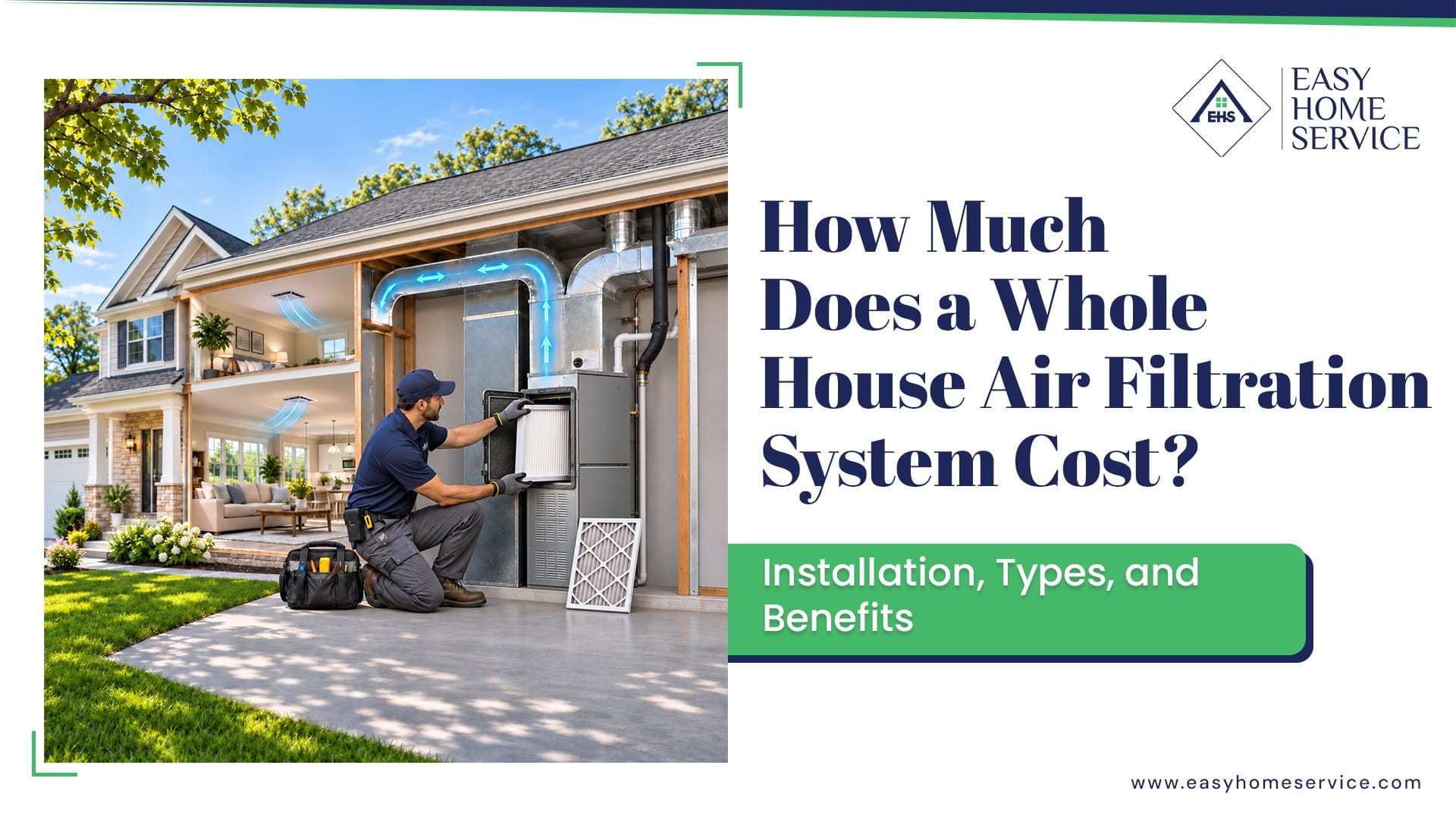
A whole-house air filtration system typically costs between $1,000 and $3,500, including installation. However, the total price can range from around $400 to $5,000 for most residential systems, while advanced, hospital-grade setups may cost up to $10,000. The average installation cost is approximately $2,448, although the final price depends on the equipment and work involved.
The biggest cost factors are the type of filtration system, the size and layout of your home, and whether your existing HVAC ductwork needs modifications. A basic media filter cabinet generally costs less than a dedicated HEPA filtration system. You should also account for ongoing expenses, such as replacement filters, cleaning, and UV bulb replacements, when estimating the long-term cost.
The whole house air filtration system cost depends on the type of equipment, the size of your home, your existing HVAC setup, and the complexity of installation.
Understanding the available options, installation requirements, and ongoing maintenance expenses can help you select a system that fits your household's needs and budget. Here's what to know before making an investment.
A whole-house air filtration system is designed to remove airborne particles from the air circulating through a home's central heating and cooling system. Unlike a portable air purifier that treats the air in one room, a central filtration unit works with the existing HVAC ductwork to filter air distributed throughout the house.
Most systems are installed near the furnace or air handler, where air passes through a filter before moving through the supply ducts. Depending on the equipment, the system may capture common particles such as:
A whole home air purifier can be particularly useful for households concerned about airborne dust, pets, or recurring indoor air quality issues.
However, filtration has limitations. Standard particle filters do not remove every gas, odor, or chemical pollutant. The most effective indoor air quality improvement strategy combines filtration with proper ventilation and reducing pollution sources inside the home.
The total cost of installing a whole-house air purifier depends on more than the equipment itself. Homeowners typically pay for the filtration unit, installation labor, and any adjustments needed to connect it to the existing HVAC system. Additional electrical work or accessories may also increase the final estimate.
Here is a breakdown of the main expenses to consider when planning your installation budget.
|
Cost component |
Estimated cost |
What affects the cost? |
|
Filtration equipment |
$200–$3,000+ |
The price depends on the filtration technology, equipment capacity, filter quality, and system design. A basic media filter cabinet generally costs less than a dedicated HEPA filtration unit. |
|
Installation labor |
$250–$900 |
Labor covers fitting the unit, connecting it to the HVAC system, sealing connections, and testing its operation. Difficult access or a more complicated installation can increase the charge. |
|
Ductwork or cabinet modifications |
$100–$1,200+ |
Some installations require changes to the return-air duct, additional filter cabinet space, new duct connections, or sealing around the equipment. |
|
Electrical work |
$0–$500 |
Basic mechanical filters may not need electrical connections. Electronic air cleaners, UV systems, and certain powered filtration units may require wiring, a power supply, or additional connections. |
|
Additional accessories and services |
$100–$600 |
Optional expenses may include air quality assessments, monitoring sensors, filter pressure gauges, or upgraded control systems. |
These are approximate U.S. budgeting ranges, not fixed installation prices. The actual quote depends on the system selected and the work required. Some contractors include labor, fittings, and basic electrical connections in one package price.
The type of air filtration equipment you choose has a significant effect on the initial investment. A standard media filter cabinet is generally a more economical option because it can often be fitted into an existing HVAC return-air setup. Electronic air cleaners and advanced filtration units may cost more because of their additional components and installation requirements.
HEPA filtration systems can involve a higher investment, particularly when the existing HVAC equipment cannot accommodate the filter directly. Some installations require a separate bypass arrangement or dedicated air-handling equipment to maintain adequate airflow.
Brand and model selection also influence equipment pricing. When comparing options, look beyond the purchase price and consider the filter replacement cost, equipment specifications, maintenance requirements, and compatibility with your existing HVAC system.
Before approving an estimate, ask for a breakdown of equipment, labor, ductwork, and any electrical work. This makes it easier to compare quotes and understand which installation expenses are actually necessary for your home.
A whole-house filtration system operates alongside the existing HVAC equipment. When the furnace or air conditioner runs, its blower circulates air through the return ducts. The air then passes through the filtration equipment before being distributed back into the living spaces.
The filtration process generally involves three stages:
1. Air intake: Indoor air enters the HVAC system through return vents and travels toward the air handler or furnace.
2. Particle filtration: The air passes through a filter or cleaning component that captures or removes certain airborne contaminants. The filtration method depends on the equipment installed.
3. Filtered air distribution: The HVAC blower moves the treated air through supply ducts and into different rooms throughout the home.
The amount of air filtered depends on the system's airflow capacity, filtration efficiency, filter condition, and operating schedule.
The U.S. Environmental Protection Agency (EPA) recommends combining filtration with source control and ventilation rather than relying on an air cleaner alone.
There are four main types of whole-house air filtration and purification systems that connect to a home’s ductwork. Each does a different job, so the “best” one depends on what you are trying to remove.
How they work. A deep pleated filter, typically 4 to 5 inches thick, sits in a cabinet attached to your return duct. Air passes through the fibers, and particles are trapped mechanically. Because the filter is thick, it has far more surface area than a standard 1-inch filter, so it can reach higher MERV ratings (MERV 11 to 16) without choking airflow.
Advantages. Lowest upfront cost, no electricity use beyond your blower, no ozone concerns, and replacement is simple.
Limitations. Captures particles, not gases or odors (unless a carbon layer is added). Filters need replacing every 6 to 12 months.
Best for. Most homes. It is the best starting point for allergies, dust, and pet dander when you want solid performance at a reasonable cost.
How they work. Air passes through an electrical field that charges particles. The charged particles are then collected on oppositely charged metal plates or cells, which you wash periodically.
Advantages. Can capture very small particles, and the washable cells remove most replacement-filter costs.
Limitations. Performance drops if cells are not cleaned on schedule. Some electronic models can produce small amounts of ozone, which is a lung irritant. The EPA advises against air cleaners that intentionally generate ozone and recommends checking that any electronic unit is certified to low or zero ozone standards (look for UL 2998 or CARB certification).
Best for. Homeowners who prefer a reusable option and will stay on top of cleaning.
How they work. True HEPA filters are rated to capture at least 99.97% of particles at 0.3 microns. Standard furnaces cannot push air through a HEPA filter, because the filter creates too much resistance. A HEPA whole-house system therefore uses a bypass design: a separate unit with its own fan pulls a portion of your home’s air through the HEPA filter and returns it to the ductwork. This is why a HEPA filtration system for a whole house costs more and is more involved to install.
Advantages. The highest particle capture available, including fine smoke, many allergens, and some bacteria and virus-carrying particles.
Limitations. Highest cost, extra electrical use, fan noise to consider, and HEPA filters and prefilters to replace. Because only a share of air is treated at a time, it works over hours rather than instantly. Bob Vila’s guide notes that HEPA filters are not typically found in traditional HVAC systems and require duct and vent modifications.
Best for. Households with asthma, severe allergies, immune concerns, or frequent wildfire smoke exposure.
How they work. UV-C lamps inside the air handler or ductwork emit light that damages the DNA of microorganisms such as mold spores, bacteria, and some viruses. Coil-mounted lamps keep the evaporator coil clean, while in-duct lamps treat air moving past.
Advantages. Helps limit mold and microbial growth on the cooling coil, and has no effect on airflow.
Limitations. UV does not remove dust, pollen, or smoke; it is not a filter. Air moves past the lamp quickly, so exposure time is short. Bulbs need replacing about once a year, and some UV technologies can create ozone, so verify the product’s specs.
Best for. Humid climates, homes with musty odors from the coil, or as an add-on alongside a media or HEPA filter. It is rarely the right standalone choice.
Several factors influence the overall cost and complexity of installing a residential filtration system.
Type of filtration technology: Basic mechanical filters generally cost less than dedicated HEPA or hybrid equipment. Advanced filtration technologies may also require additional electrical connections or specialized installation.
Home size and layout: Larger homes may require equipment with greater airflow capacity. The number of rooms, duct arrangement, and HVAC configuration can also affect system selection.
Existing HVAC compatibility: Not every HVAC unit can accommodate every filter. A higher-efficiency filter may create additional resistance to airflow, particularly if the equipment is not designed for it.
Ductwork condition: Leaky, damaged, or poorly configured ducts may need attention before installing additional filtration equipment. Proper filter fit is also important because air can bypass a filter that does not fit correctly.
Labor and installation requirements: Straightforward filter upgrades typically require less work than installing a dedicated air cleaner that needs ductwork changes or electrical connections.
Maintenance requirements: Filter replacement frequency, cleaning procedures, and replacement component costs contribute to the long-term expense.
Considering these factors before purchasing equipment helps homeowners avoid selecting a system that is too restrictive, unnecessarily expensive, or unsuitable for their HVAC setup.
An additional filtration system may be worth considering when the existing HVAC filter does not adequately address household air quality concerns.
Some situations where homeowners may explore an upgrade include:
Recurring dust accumulation: Dust that frequently settles on furniture and surfaces may indicate that additional filtration or improvements to housekeeping and duct sealing are worth investigating.
Pets in the household: Pet hair and dander can circulate indoors, making appropriate filtration helpful as part of a broader cleaning routine.
Seasonal pollen concerns: During allergy seasons, an effective filtration setup may help reduce some pollen particles circulating inside the home.
Smoke and outdoor particle intrusion: Smoke and fine particles entering from outdoors may increase indoor particle levels. Suitable filtration can help reduce these particles.
Aging HVAC filters: An older or unsuitable filter may not provide the filtration performance a household needs.
It is important to identify the source of an air quality concern before choosing equipment. For example, filtration may capture some mold spores, but it will not resolve mold growth caused by a moisture problem. That requires addressing the underlying water source and removing the affected material.
Choosing a filtration system involves more than selecting a filter with a higher efficiency rating. The equipment must work with the home's existing heating and cooling system without creating unnecessary airflow restrictions.
A professional HVAC assessment helps determine which filtration options are appropriate for the equipment and household requirements.
An HVAC professional can evaluate:
One important consideration is the Minimum Efficiency Reporting Value (MERV), which measures how effectively an air filter captures particles of different sizes under standardized testing.
Higher MERV ratings generally indicate greater particle-removal efficiency. However, a higher rating is not automatically the best choice for every residential HVAC system.
The EPA suggests selecting a MERV 13 filter, or the highest-efficiency option the system can accommodate. ASHRAE also highlights the importance of considering airflow resistance when upgrading filter efficiency.
An HVAC technician can check the manufacturer's recommendations and determine whether the existing equipment can support a higher-rated filter or requires modifications.
This assessment helps homeowners choose filtration equipment that supports their indoor air quality goals without compromising HVAC operation.
Choosing the right filtration equipment starts with understanding your home's air quality concerns and existing HVAC setup. A suitable system can help reduce airborne particles, but its performance depends on proper sizing, installation, and regular maintenance.
Before investing in new equipment, compare filtration technologies, understand the installation requirements, and have your HVAC system assessed for compatibility.
Easy Home Service helps homeowners connect with home service professionals who can assist with their HVAC and indoor air quality needs. Exploring the right professional support can help you make a more informed decision about improving filtration throughout your home.
Find Top Rated Service Providers
We help you find top service providers and compare quotes.



Leave a Comment: