Your Go-To for Complete Home Solutions and Trusted Excellence
Your Go-To for Complete Home Solutions and Trusted Excellence
HVAC

By Ar. Daisy,
August 04, 2026


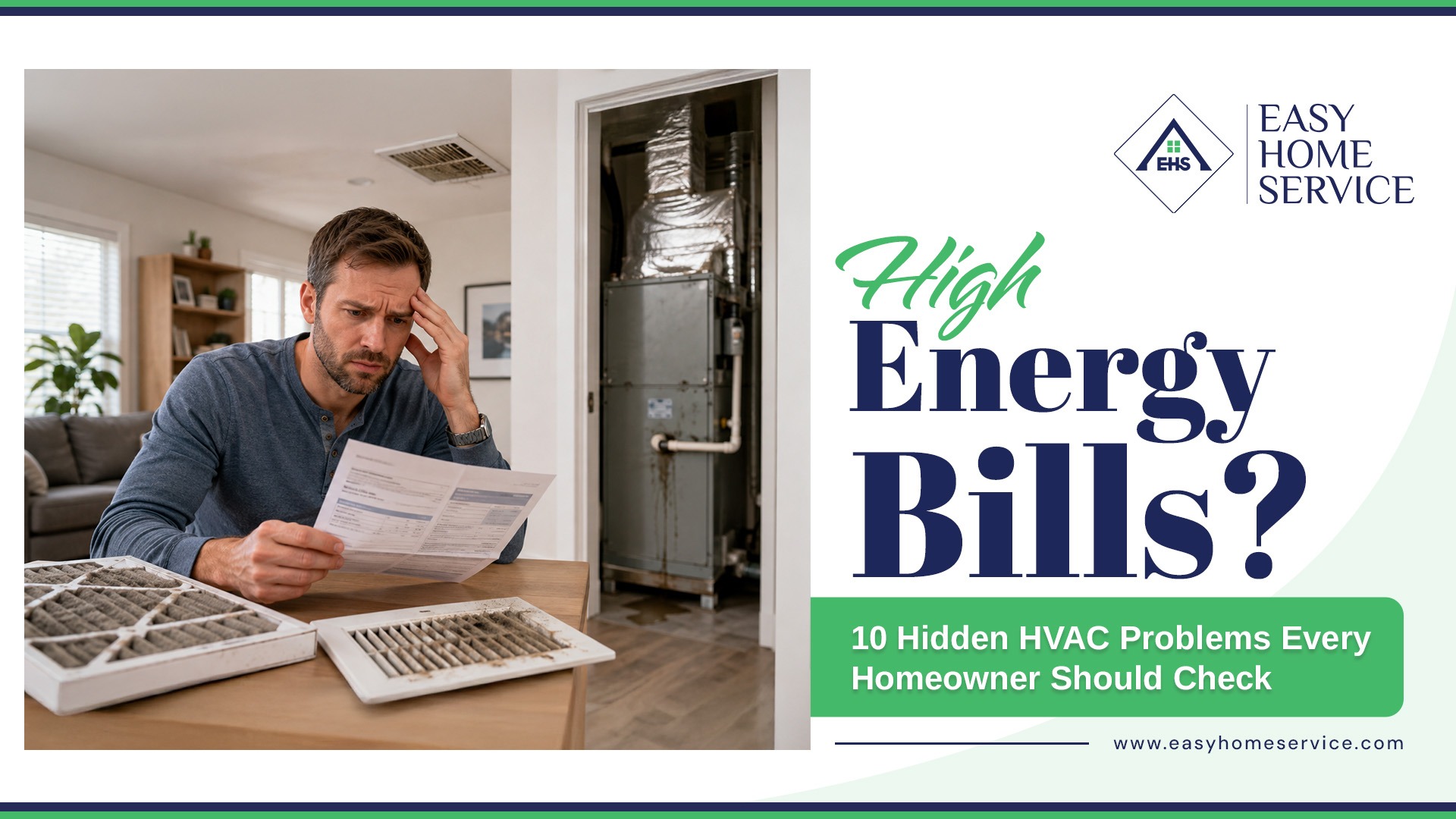
You open the mail, see the energy bill, and do a double-take. It's higher than last month, and you haven't changed a thing about how you live. No new appliances, no extra guests staying over, nothing. So what's going on?
In most homes, the real answer is sitting quietly in the basement, attic, or utility closet: the HVAC system. Heating and cooling account for close to half of a typical home's energy use, which means even small inefficiencies add up fast on your bill. The tricky part is that most of these problems don't announce themselves. Your furnace doesn't stop working, it just works harder than it should, and you end up paying for that extra effort every single month.
We've inspected enough systems to know the usual suspects by heart. Below are the 10 most common culprits behind high energy bills, along with what you can actually do about each one.
Your HVAC system consumes far more power or gas than everything else in your home on a daily basis. Heating and cooling often account for 40 to 50 percent of a home's overall energy use, which indicates that this single system has a greater impact on your monthly cost than your refrigerator, water heater, and all light switches together.
That's also why high energy bills so often trace back to HVAC problems rather than anything else in the house. A furnace or AC unit doesn't fail all at once. Minor efficiency issues such as a dirty filter, a minor duct leak, or an incorrectly programmed thermostat frequently go unnoticed individually. However, when these small problems persist simultaneously over several months, their impact accumulates. An issue that might only add five dollars to a monthly bill on its own can quickly scale to an extra forty or fifty dollars when compounding with other undetected faults.
This is the part that catches most homeowners off guard. Nobody notices a 3 percent efficiency drop. What people do notice, eventually, is a bill that's crept up 20 or 30 percent over a year with no obvious explanation. By the time it's noticeable, several small HVAC problems causing high bills have usually been quietly working against each other for months. That's exactly what the next ten sections walk through, one issue at a time, along with what each one actually costs you if it goes unaddressed.
It's the one we are most frequently faced with and is also the easiest repair. A clogged filter can hinder airflow, causing the blower motor to work harder to move air into the unit. The extra strain is reflected directly on your electric bill as it may reduce the life of the entire unit.
Many homeowners don't realize that filters exist until there is a problem. The best general rule is to inspect the filter every 30-to-60 days. You should check it more frequently if you have pets or allergies within the home. If you're not certain when the last time you changed it is usually a sign that it's time to change it.
Here's the part people miss though. A dirty filter doesn't just waste energy, it also lets more dust and debris reach the internal components of your system, which speeds up wear on parts that are far more expensive to replace than a filter. Spending five dollars on a new filter every month or two is a lot cheaper than replacing a blower motor two years early. Regular filter changes are part of any solid routine HVAC maintenance plan, and they're honestly the easiest fix on this entire list.
Ducts are where that your air conditioning system travels Like any other road cracks and gaps can cause issues. The research shows that homes could lose between 20 and 30 per cent of their air flowing through the duct system due to holes, leaks and weak connections. It's the air you've paid to cool or heat that is escaping in your crawl space before it reaches your living space.
The frustrating part is that duct leaks are often invisible. You won't see them, you'll just notice certain rooms never quite reach the temperature you set. If your energy bills are high and some rooms feel oddly warm or cold compared to others, it's worth getting a duct inspection and repair scheduled before winter really sets in.
Furnaces don't fail overnight, they decline slowly over 15 to 20 years, losing efficiency along the way. A unit built two decades ago might be running at 65 to 70 percent efficiency, while a modern furnace hits 90 percent or higher. That gap means the old furnace burns more fuel to produce the same warmth, and you feel it every billing cycle.
If your furnace is pushing past the 15 year mark and your bills keep creeping up despite normal usage, it might be worth having a technician take a look. Sometimes a repair solves it. Other times, the smarter financial move is replacement. Either way, our furnace repair services team can walk you through which option actually makes sense for your specific unit and budget.
Boiler owners have a similar situation, but with a different piece of equipment. Mineral buildup, silt in the tank, and worn components can cause a boiler to use more fuel to achieve the same temperature it once did effortlessly. Homes with older boilers, particularly those that haven't had a professional tune-up in a year or more, typically experience a slow, constant increase in heating costs.
The good news is boilers respond really well to maintenance. A proper boiler tune-up service that flushes sediment, checks the pressure relief valve, and inspects the burner can often bring efficiency back up without needing a full replacement.
Ventilation problems are sneaky because they don't feel like an HVAC issue at first. What actually happens is your system ends up fighting itself. Blocked vents, closed registers in unused rooms, or a poorly balanced duct system make certain areas of your home too hot or too cold, which pushes people to crank the thermostat further than necessary to compensate.
If you've noticed yourself adjusting the thermostat more often than you used to, or certain rooms always need a space heater or fan to feel comfortable, that's a ventilation balance issue. Our home ventilation services include airflow assessments that pinpoint exactly where the imbalance is coming from.
If you've noticed higher energy bills, uneven heating, or rooms that never feel comfortable, it may be time for a professional HVAC inspection. Easy Home Service helps homeowners connect with trusted local HVAC professionals who can identify hidden issues before they become costly repairs.
This one isn't a mechanical failure, it's a habit problem, but it costs just as much as any broken part. Running your HVAC system at the same temperature all day, including hours when nobody's home or everyone's asleep, wastes a surprising amount of energy over a month.
The Department of Energy estimates that adjusting your thermostat by 7 to 10 degrees for eight hours a day can save around 10 percent annually on heating and cooling. That's a meaningful chunk of your bill, and it costs nothing beyond a bit of setup time on a programmable or smart thermostat.
This one applies more to your cooling season, but it's worth including since it often gets discovered right when energy bills spike in late summer. Low refrigerant means your AC can't absorb heat properly, so the compressor runs longer and harder trying to hit the temperature you set. Longer run times translate directly into higher bills.
Refrigerant doesn't just run low on its own, a leak somewhere in the line is almost always the cause. If your air conditioner has been running nonstop but the house still feels warm, that's a strong sign this is happening. It needs a professional repair, not just a refrigerant top-up, or the leak keeps draining your system (and your wallet) all over again.
Bigger isn't always better, and this is one homeowners rarely expect. An oversized unit cools or heats the space too quickly, shutting off before it properly removes humidity or evenly distributes air, then kicking back on again soon after. This constant cycling, called short cycling, uses more energy than a properly sized system running a normal cycle length.
An undersized system has the opposite problem. It runs nonstop trying to keep up with demand it was never built to handle. Either way, the sizing was likely miscalculated when the system was installed, and correcting it usually means a proper load calculation followed by the right equipment for your home's actual square footage and insulation level.
We see this constantly. Homeowners wait until something breaks to call an HVAC company, but by that point, the system has often been running inefficiently for months or even years beforehand. Dirty coils, low refrigerant, worn belts, and loose electrical connections all creep up gradually, and each one nudges your energy bill a little higher without ever fully breaking the system.
A twice yearly maintenance visit, once before the heating season and once before cooling season, catches these small issues while they're cheap and easy to fix. It's the difference between a $150 tune-up and a $1,500 repair bill down the road.
Think of it the same way you'd think about your car. Nobody waits for the engine to seize up before changing the oil, yet a lot of homeowners treat their HVAC system exactly that way, running it year after year without a single check-up until it finally quits.
This last one technically isn't an HVAC problem, but it affects your HVAC system so directly it deserves a spot on this list. If your attic, walls, or windows aren't properly insulated, conditioned air escapes the house almost as fast as your system produces it. Your furnace or AC then has to run longer cycles just to maintain the temperature you set, and all that extra runtime shows up on your bill.
A quick way to check is feeling around window frames and door edges on a windy day. If you feel a draft, air is escaping somewhere nearby too. Pairing better insulation with an energy-efficient furnace upgrade tends to give homeowners the biggest combined savings, since neither one works at its best without the other.
Not every fix on this list requires a technician or a big check. A handful of small habits and low-cost changes can bring your energy bills down noticeably, sometimes within the very next billing cycle. Here's where to start.
Seal the obvious gaps first. Weatherstripping around doors and caulk around window frames cost almost nothing and take an afternoon to apply. If your HVAC system is fighting drafts all day, no amount of energy-efficient furnace settings will make up for the air escaping through the front door.
Use your thermostat like it's meant to be used. A lot of homeowners set one temperature and leave it there year round. Dropping the temperature 7 to 10 degrees for eight hours while you're at work or asleep, then letting it return to normal, can cut heating and cooling costs by close to 10 percent annually. If you don't already have one, a programmable or smart thermostat pays for itself fast.
Cleanse or replace your filter on a regular schedule, not when you forget. Put it on your calendar on your phone every thirty to sixty days. This alone addresses one of the most common HVAC problems causing high bills, and it takes about ninety seconds.
Close the gap between rooms and vents. Move furniture, rugs, and curtains away from supply and return vents. Blocked airflow forces your system to run longer to reach the same temperature, which quietly drives up reduce heating and cooling costs efforts you might already be making elsewhere.
Run ceiling fans in the right direction. Counterclockwise in summer, push cool air down, and clockwise in winter, warm air is pulled off the ceiling back to the room. This may sound like a minor thing, but it allows you to move the thermostat one couple of degrees in either direction and not lose the comfort.
Give your outdoor unit some breathing room. Take care to trim back leaves, plants and other debris at least two feet in front of your condenser outside or heat pump. If your unit is blocked, it will have to perform more work to move air and is a common waste of energy and isn't expensive to repair.
Plan a routine maintenance check before you think about the worst. Sometimes, what seems like the system is in its final step is actually due for cleaning, a refrigerant top-up or even loose connections. A regular HVAC maintenance appointment is nearly always less expensive than rushing to a replacement and often solves issues that homeowners believed meant a new unit was on the way.
Reading through a list like this is helpful, but let's be honest, most people don't have the time or tools to diagnose duct leaks or check refrigerant levels themselves. That's exactly the gap Easy Home Service was built to fill.
Easy Home Service connects homeowners with vetted, experienced HVAC technicians and other trusted home service professionals, all through one simple platform. Instead of searching around, reading conflicting reviews, and hoping the technician who shows up actually knows what they're doing, you get matched with someone qualified for your specific issue, whether that's a furnace acting up, a boiler that needs a tune-up, or a full energy efficiency assessment.
Booking takes just a few minutes, pricing is transparent before anyone steps foot in your home, and every technician in the network is held to the same standard of quality. If any of the 10 problems above sound familiar, Easy Home Service is a straightforward way to get a professional out to your house without the usual hassle of finding one you can trust.
Small HVAC problems rarely fix themselves. If your energy bills keep climbing or your heating system isn't performing like it used to, don't wait until a minor issue becomes a major repair. Easy Home Service makes it easy to connect with experienced local HVAC professionals who can help restore your system's efficiency and keep your home comfortable.
High energy bills rarely happen without a reason. In many cases, the problem isn't your utility provider but small HVAC issues that have developed over time. A clogged air filter, leaking ductwork, an aging furnace, poor ventilation, or skipped maintenance can all force your system to use more energy than necessary.
The good news is that many of these problems can be identified and corrected before they lead to expensive repairs or premature equipment replacement. Addressing HVAC issues early helps improve airflow, maintain consistent indoor temperatures, reduce unnecessary energy use, and put less strain on your heating system. Over time, that can translate into lower monthly bills, better home comfort, and a longer lifespan for your HVAC equipment.
If your energy bills continue to grow despite typical usage, you should get your system checked by a specialist. Easy Home Service connects you with a reputable local residential HVAC services expert who can evaluate your system, detect hidden efficiency issues, and propose the best solutions to restore comfort and enhance your home's energy performance.
Find Top Rated Service Providers
We help you find top service providers and compare quotes.








Leave a Comment: