Your Go-To for Complete Home Solutions and Trusted Excellence
Your Go-To for Complete Home Solutions and Trusted Excellence
electrical

By Ar. Daisy,
February 27, 2026


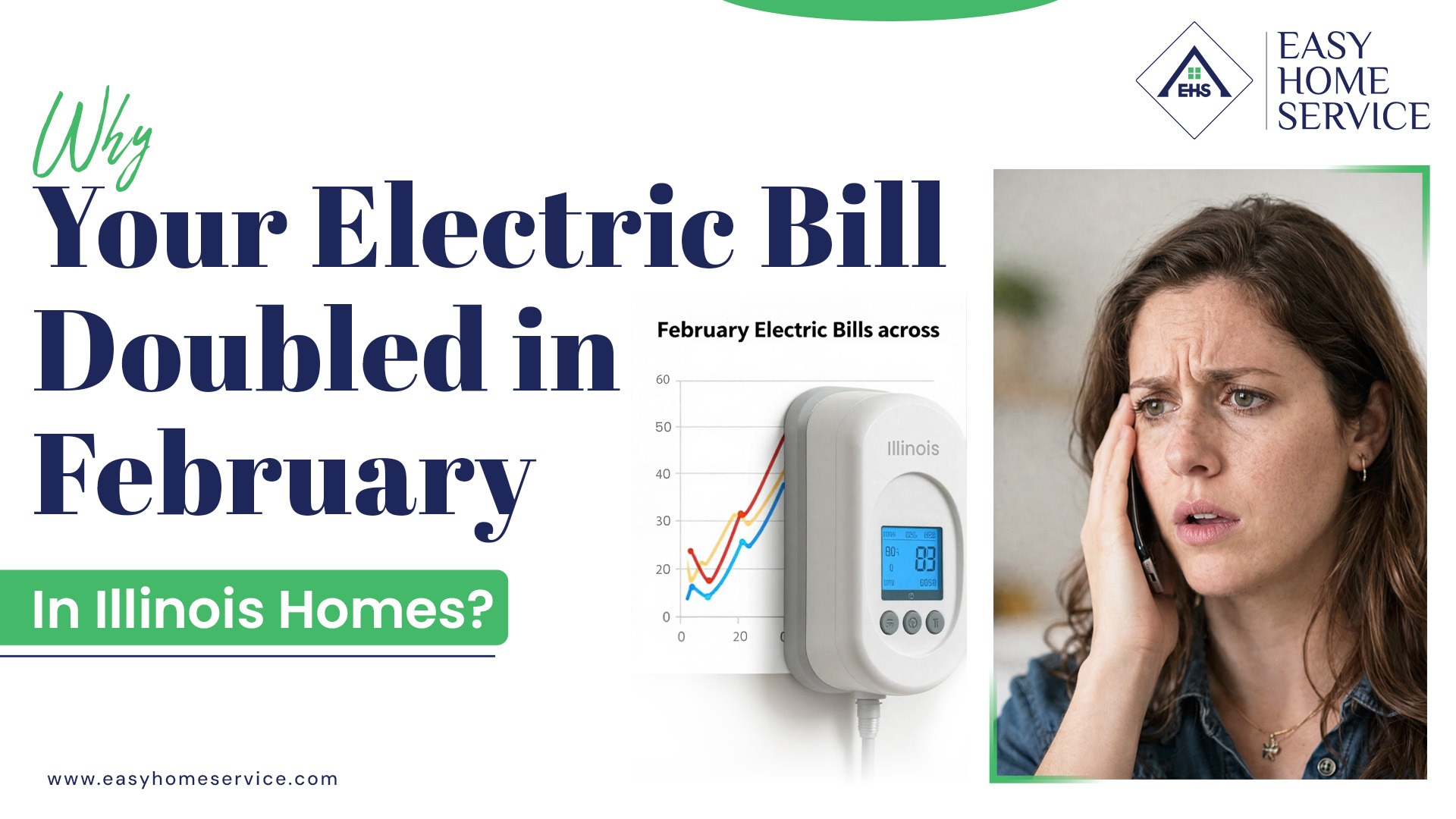
To truly understand why the electric bill doubled, homeowners must understand how uniquely demanding the Illinois weather is on residential buildings. Unlike southern states, Illinois lies in a mixed humid continental climate zone. This means that winter is not only cold but also persistently cold, windy, and dry. In cities like Chicago, Joliet, Elgin, and Rockford, the wind chill regularly causes the temperature to plunge way below the outdoor temperature shown on your thermostat.
When strong winter winds hit a home, they strip heat from siding, roofs, and window frames much faster than normal convection heat loss. This process is called air infiltration, and it dramatically increases heating demand.
The heating system is then compelled to work even harder to keep the indoor temperature at a comfortable level. A furnace that is operating efficiently can, nevertheless, continue to run almost nonstop during cold spells. This is why homeowners are suddenly shocked by the High Heating Bills in Illinois in February.
The longer the system runs, the more electricity the blower motor uses, and if your home has a heat pump, the auxiliary heat strips may activate for extended periods. That alone can account for the moment you realize your power bill doubled.
Many houses across Illinois- especially in Chicago suburbs and Midwestern towns- were built between the 1950s and 1990s. At that time, insulation standards were far lower than modern building codes. Attics are typically equipped with only a thin layer of fiberglass insulation, and the heating ducts are almost always found running through unconditioned basements or crawl spaces. Over decades, insulation compresses and loses effectiveness, meaning your furnace must replace heat that escapes almost immediately after it is produced.
This explains a common homeowner complaint: the thermostat says 70°F, but rooms feel cold. The furnace is producing heat, yet the house cannot retain it. The heating unit is indeed generating heat, but the house is unable to hold onto it. When the retention capacity of a house fails, the heating and cooling system responds by operating for longer periods. Longer running times will lead to greater consumption of electricity, and all of a sudden, homeowners start wondering why my electric bill doubled or why my electric bill doubled.
In many cases, the HVAC unit is blamed incorrectly. The real problem is building envelope efficiency: insulation, sealing, and airflow management.
While heating is the main driver, winter introduces other energy loads that quietly increase Illinois winter energy bills. In February, there are a few daylight hours that increase lighting significantly. Illinois homes' lamps and light bulbs are now turned on quite a lot, both in the mornings and during the evenings. Electric water heaters have to work more, because incoming water temperatures are much colder than in summer. A water heater must heat 40°F water instead of 65°F water, requiring substantially more electricity.
Additionally, homeowners tend to stay indoors more. The running duration of televisions, computers, cooking appliances, humidifiers, and space heaters is extended. Many homeowners add portable heaters to cold rooms, but these devices are among the most energy-intensive appliances in a house. A single space heater running 8 hours daily can noticeably contribute to an energy bill increase in Illinois homes.
All these factors combine, which is why many households see a sudden February heating bill spike in Illinois homes rather than a gradual rise.
Heating systems are rated for efficiency under standard conditions, but extreme cold reduces real-world performance. Gas furnaces lose efficiency when airflow is restricted or when heat exchangers accumulate dust. Heat pumps lose efficiency rapidly when outdoor temperatures drop below freezing. When the outdoor temperature gets very low, the system turns on the electric resistance heating as a backup. These electric heating components are essentially large coils just like the ones in a toaster; they generate heat fast but consume a very high amount of electricity.
This is the moment when homeowners in Illinois experience winter energy costs in shock. The heating system is not faulty; it is just working hard to make up for the very cold outdoor temperature. However, if maintenance has been neglected, the energy consumption becomes even worse. Dirty evaporator coils, clogged air filters, or a worn-out blower motor make the heating system work harder and longer to heat the indoor air to the desired temperature.
And this is just one among the many reasons for high energy bills in winter.
HVAC maintenance is not just about preventing breakdowns- it directly affects energy consumption. A professionally serviced heating system runs more smoothly, distributes heat evenly, and reaches thermostat settings faster. When airflow is optimized and components are calibrated, the furnace cycles normally instead of running constantly.
When airflow is unhindered and the various parts are tuned properly, the furnace can run normally, and it does not have to run all the time. Homeowners who schedule yearly inspections frequently avoid the scenario where the electric bill doubles.
Maintenance includes checking electrical draw, testing motors, cleaning burners, measuring airflow, and ensuring proper thermostat operation. Even correcting thermostat placement can reduce runtime because poorly placed thermostats misread indoor temperature.
This is especially of great importance in Illinois, where the winter season carries on for months without maintenance, minor handling, and small inadvertent changes multiply slowly day by day. 
Easy Home Service connects you with you to find reliable local HVAC services in Illinois, United States. You no longer need to be sending contractors random calls in the middle of a heating emergency; instead, homeowners can quickly get service and be connected with the Midwest region climate experts.
Professionals available through Easy Home Service can diagnose whether your high bill is caused by:
• inefficient furnace operation
• duct leakage
• heat pump auxiliary heat overuse
• thermostat miscalibration
• insulation heat loss
They can also recommend practical solutions such as furnace repair, sealing ductwork, upgrading thermostats, or evaluating whether a furnace replacement Chicago option would be more cost-effective long-term.
Many homeowners discover their heating system has been operating inefficiently for years, and correcting it significantly reduces future winter bills.
If your electric bill doubles, there are several immediate steps you can take while waiting for a professional inspection. First, change the furnace filter since a blocked airflow is one of the fastest causes of excessive runtime. After that, look at the vents and make sure no furniture or rugs are blocking the air circulation. Simply lowering the thermostat by two degrees at night can lead to a decrease in running time without a major loss in comfort.
Sealing window gaps with weatherstripping and using thermal curtains can noticeably reduce heat loss in Midwest winters. Avoid running space heaters continuously unless necessary, as they often contribute heavily to high energy bills in Illinois winter situations.
Do You Know?
In Illinois, heating accounts for the largest portion of winter household energy use- often more than 40–60% of total home energy consumption during peak winter months. That means even a small HVAC inefficiency can cause a noticeable jump in your bill. A furnace running just 2 extra hours per day during February can add a high cost by the end of the billing cycle.
A poorly performing furnace can add hundreds of dollars to your winter energy costs.
Our network technicians can check airflow, thermostat calibration, duct leakage, and heating efficiency to determine why your electric bill doubled.
A February energy spike is not just a one-month inconvenience. It is an early warning sign. Homes that show unusually high winter energy usage frequently develop major HVAC failures within the next one to two seasons. Motors overwork, heat exchangers crack, and systems eventually stop heating during the coldest days of the year.
Addressing the issue early prevents emergency breakdowns, improves comfort, and protects your household budget. Most importantly, efficient heating systems are safer, especially during severe Midwest cold waves.
Winter in Illinois forces heating systems to run for extended hours. Cold outdoor air, shorter days, increased lighting use, and electric backup heating all raise demand. When temperatures stay below freezing for several days, heating systems consume significantly more electricity, often doubling what homeowners typically pay in February.
Homes lose heat faster in cold weather, causing furnaces, heat pumps, blower motors, water heaters, and humidifiers to work longer. On top of that, lighting and appliance usage increases during winter months, all contributing to higher electricity consumption.
Many Illinois residents are protected during winter disconnection periods. Utilities typically cannot shut off heating-related service during extreme cold if the household qualifies or has arranged a payment plan. However, unpaid balances should still be addressed to avoid future service interruption.
Call a technician if:
These signs indicate your heating system may be wasting energy or nearing failure.
Find Top Rated Service Providers
We help you find top service providers and compare quotes.










Leave a Comment: