Your Go-To for Complete Home Solutions and Trusted Excellence
Your Go-To for Complete Home Solutions and Trusted Excellence
Water Damage

By Ar. Daisy,
March 11, 2026


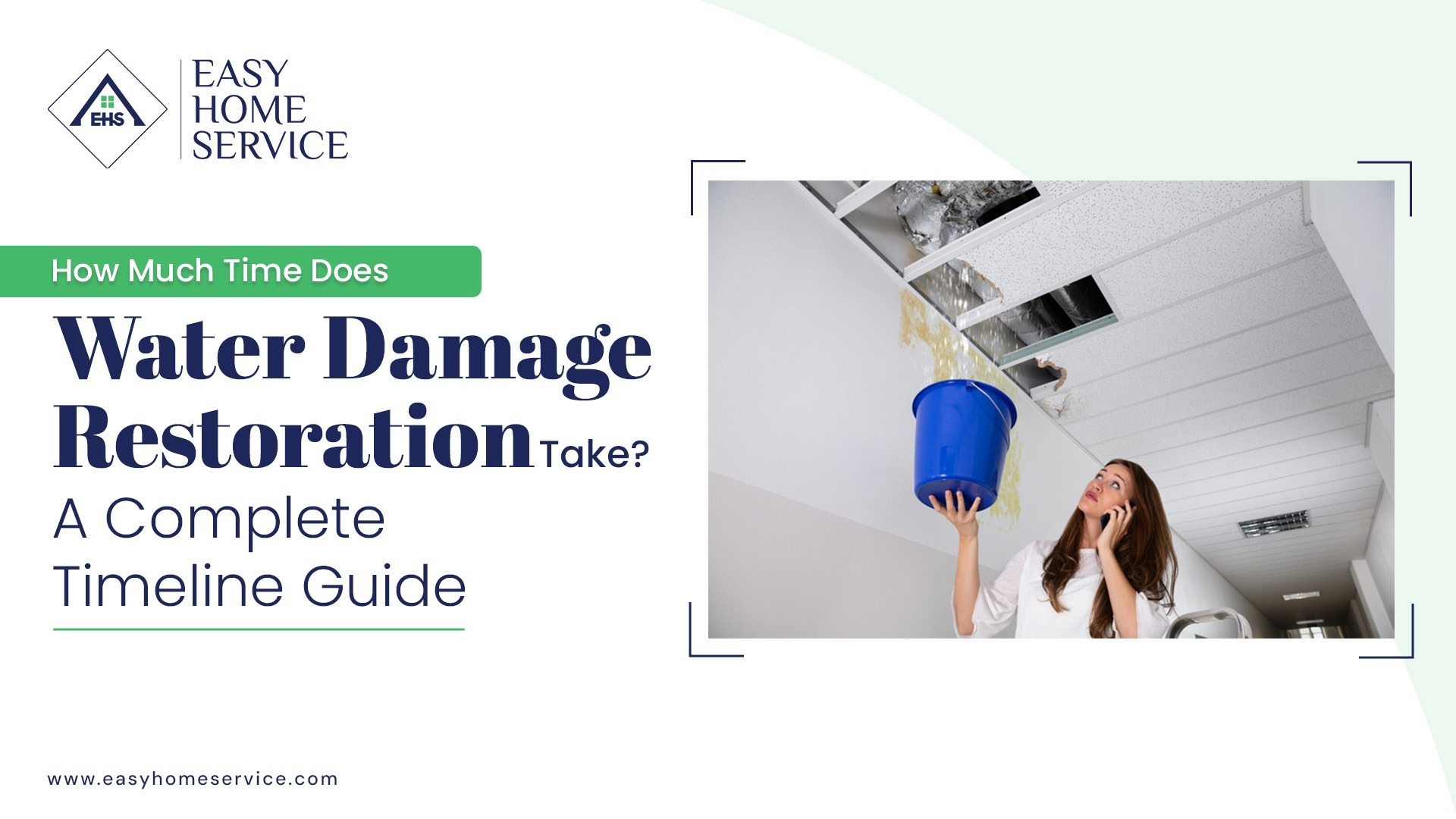
Water damage is one of the most common and stressful problems homeowners and property managers face. Water damage can be caused by several factors, such as broken pipes and flooding. Moreover, it can quickly affect the structure and value of a property. The biggest question most property owners ask after discovering water damage is:
The answer to the question varies depending on the extent of the damage, the property area affected, and the materials for water damage restoration home service. The restoration services for water damage may take only a few days, while in some cases, the process may take weeks or longer if the damage has been critical.
In this complete timeline guide, we will break down the entire restoration process step by step, explain the average time required for each stage, and highlight the factors that influence how long the remediation process may take.
Water damage restoration is the process of removing water, drying affected areas, cleaning contaminants, and repairing damaged structures to restore a property to its original condition.
This process typically includes water extraction, drying, dehumidification, sanitation, and structural repairs. Minor cosmetic work, like painting touch-ups, may be done after the damaged areas are fully dried and repaired.
A water damage restoration company usually employs advanced technology and methods. Most professionals use safe and effective water damage restoration methods as outlined by organizations such as the Institute of Inspection, Cleaning and Restoration Certification (IICRC).
The process usually includes:
✔ Inspection and damage assessment
✔ Water extraction and removal
✔ Drying and dehumidification
✔ Cleaning and sanitizing
✔ Repair and reconstruction
Below is a typical timeline for the water damage and repair process for homes.
| Restoration Stage | Average Time |
|---|---|
| Inspection and Assessment | 1 – 2 hours |
| Water Removal | 1 – 3 days |
| Drying and Dehumidification | 3 – 5 days |
| Cleaning and Sanitizing | 1 – 2 days |
| Repair and Reconstruction | Several days to weeks |
Overall, minor water damage may be resolved within 3–7 days, while severe water damage restoration may take 2–6 weeks or longer.
Let’s examine each stage in detail.
The first stage of water damage repair and restoration services begins with a professional inspection and damage assessment. This is an essential step in the water damage and repair process since it helps the experts to understand the severity of the damage and develop an effective strategy to restore water-damaged property.
Restoration specialists perform several important tasks during the inspection process, including:
✔ Identifying the source of the water intrusion
✔ Determining the type of water contamination
✔ Assessing the extent of structural and material damage
✔ Developing a detailed restoration plan and timeline
This inspection allows professionals to determine how extensive the damage is and what equipment or techniques will be required to restore the property safely.
Water damage is usually classified into three major categories based on the level of contamination. Knowing about these categories is important to enable water damage remediation companies to use the best water damage remediation methods.
Clean water damage comes from sources that do not initially pose significant health risks. Due to its low level of contamination, it is usually easy and fast to repair this kind of damage by water damage remediation firms.
✔ Broken or leaking water supply line
✔ Sink or bathtub overflow
✔ Rainwater leaks from roofs or windows
Since this water is relatively safe, the restoration process is usually faster if it is addressed quickly.
Grey water is water with moderate contamination levels and has the potential to cause illness if it comes into contact with individuals. It usually comes from appliances or plumbing fixtures.
✔ Washing machine
✔ Dishwasher
✔ Toilet overflow without sewage
Water damage remediation services may require additional cleaning and sanitation, and disinfection procedures. Restoration may be slightly longer compared to other water damage situations.
Black water is the most dangerous type of water damage because it is usually contaminated with harmful bacteria, pathogens, and other toxic materials. It is essential to seek water damage remediation services. This type of damage poses serious health risks and requires specialized restoration procedures.
✔ Sewage backup
✔ Floodwater from a storm
✔ River or storm surge water
Because of the high contamination level, black water restoration may require extensive cleaning and sanitation procedures due to extensive cleaning, sanitization, and safety precautions.
To perform a thorough inspection, water damage cleanup contractors use specialized tools designed to detect hidden moisture and evaluate the extent of damage.
✔ Some of the most commonly used tools include:
✔ Moisture meters to measure water levels in material
✔ Thermal imaging cameras to detect hidden moisture behind wall
✔ Hygrometers to measure humidity levels in the air
These special pieces of equipment help water damage restoration specialists detect hidden moisture in walls, floors, and ceilings that are not easily visible to the naked eye.
Once the inspection is completed, the restoration team prepares a detailed restoration plan, timeline, and cost estimate so that property owners understand what to expect during the process.
Once the inspection and damage assessment have been completed, the next step is water extraction. At this stage, water damage restoration services aim to remove all the standing water from the affected areas as quickly as possible.
It is one of the most significant steps provided by a water damage cleanup contractor. Water can cause significant problems if it is allowed to stay inside the walls, flooring, furniture, and other structural materials within a building.
Water damage restoration companies aim to remove all the water as quickly as possible to avoid future problems and shorten the duration of the water damage restoration process.
Water extraction is one of the most critical stages of restoration. If water remains inside walls, flooring, or furniture, it can lead to serious problems such as mold growth, structural damage, and material deterioration.
Professional restoration companies use powerful and specialized equipment designed to remove water quickly and efficiently.
Common water extraction equipment includes:
✔ Industrial pumps for removing large volumes of water
✔ Wet vacuums for extracting water from floors and carpet
✔ Truck-mounted extraction units for large-scale water removal
These are usually high-tech equipment that enables water remediation contractors to remove thousands of gallons of water in a short amount of time. This is usually beneficial in accelerating water damage restoration and repair services.
Extraction time is usually affected in a number of ways, depending on the severity of water damage. Some of the key factors that are usually involved in this process include:
✔ The depth of standing water
✔ The type of flooring materials
✔ The level of structural damage
For example:
For instance, a small bathroom leak or overflow usually takes a few hours to completely extract water from a property. In contrast, a large basement flood usually takes 1 to 3 days of continuous water extraction to completely dry up water from a property. Fast water extraction is usually important in this case since mold usually begins to grow in 24 to 48 hours after water damage.
Even after all visible water has been removed, this hidden moisture has the potential to cause problems such as mold growth, unpleasant odor, and long-term damage to the structure over time. In order to prevent these problems from arising, it is recommended that professional water damage remediation services be used. Common materials that can trap moisture include:
✔ Walls and drywall
✔ Carpets and rug
✔ Furniture and upholster
✔ Wood flooring
✔ Insulation
This is why professional drying and dehumidification are necessary after water extraction.
During the drying phase, professional water damage restoration specialists use high-tech drying equipment to remove all hidden moisture from the affected structure and environment.
Key drying equipment includes:
✔ High-speed air movers that circulate air across wet surface
✔ Industrial dehumidifiers that remove moisture from the air
✔ Moisture monitoring devices are used to measure the drying progres
These machines work together to evaporate moisture from materials and remove it from the surrounding environment.
Technicians continuously monitor the drying process to ensure that all affected materials return to safe moisture levels.
They typically check:
✔ Humidity levels in the indoor air
✔ Moisture content inside the building materials
✔ Temperature and ventilation conditions of the air
Daily monitoring helps ensure that drying is progressing correctly and prevents hidden moisture from remaining in the structure.
In most situations, the drying and dehumidification process takes approximately 3 to 5 days.
Experienced water damage restoration companies employ high-tech equipment to dry and dehumidify the property completely and remove all moisture from the affected areas.
Nevertheless, it is essential to note that there are instances where drying and dehumidification can take longer than usual due to various environmental and structural factors. For example:
✔ Weather condition
✔ Air circulation and ventilation
✔ Material absorption levels
For instance:
✔ Hardwood floors often require additional time to dry completely
✔ Concrete and brick surfaces may retain moisture longer due to their dense structure.
Once the property has been fully dried, the next step in the restoration process is cleaning and sanitizing the affected areas.
Water damage often brings contaminants, bacteria, and unpleasant odors into the property. Proper cleaning ensures that the environment is safe, hygienic, and odor-free.
Restoration professionals perform several cleaning tasks to restore the property.
These tasks may include:
✔ Cleaning of carpets and deodorization of the carpet
✔ Upholstery cleaning
✔ Surface disinfection
✔ Odor removal treatment
✔ Mold prevention treatment
To ensure proper sanitation, restoration teams often use specialized cleaning tools and products, such as:
✔ Antimicrobial cleaning solution
✔ Air scrubber
✔ Fogging equipment
To effectively sanitize the affected structures, water damage remediation companies use specialized equipment and professional-grade cleaning products.
One of the problems faced by property owners after water damage is a musty or damp smell. This is normally a result of moisture accumulation in items or the presence of living organisms.
To eliminate these odors, professionals may use:
✔ Ozone treatment equipment
✔ HEPA air filtration machine
✔ Deodorizing fogging system
This cleaning and sanitizing stage usually takes about 1 to 2 days to complete.
The final part of water damage restoration services is repairing items damaged by water. The time taken for this part of water damage repair and restoration services varies widely.
A residential water damage restoration company assesses the condition of structural items in a building and establishes whether they can be repaired or replaced.
Typical restoration repairs may include:
✔ Replacing damaged drywall
✔ Installing new flooring
✔ Repairing ceilings
✔ Painting walls
✔ Replacing insulation
✔ Performing structural repair
Minor repairs are usually necessary in instances where there is water damage confined to a limited area of the property.
✔ Drywall patching
✔ Carpet replacement
✔ Repainting damaged walls
These types of repairs generally take 3 to 5 days to complete.
Where there is extensive damage, there is usually a need to carry out major reconstruction work to restore the property.
✔ Structural rebuilding
✔ Complete floor replacement
Such major repairs can take weeks and even months to complete, depending on the extent of damage and property size.
Not every water damage restoration project follows the same timeline. Several factors can influence how long the restoration process will take. These factors determine the severity of the damage, the complexity of the restoration work, and the overall time required to fully restore the property. Some of the most common factors that may affect the time taken for the restoration services for water damage are as follows:
The size of the affected area is one of the largest factors that determines the length of time taken for the restoration and repair services for water damage. The larger the affected area, the longer the time taken for the restoration and repair services for water damage.
For example:
✔ A single-room flood may be restored within a few days
✔ A whole-house flood may require several weeks for complete restoration.
The larger the affected area, the more equipment, labor, and drying time will be required to complete the restoration process.
The type of water damage is another factor that plays an important role in determining the length of time taken for the water damage restoration process.
Water damage caused by clean water, such as water leaking from pipes or an overflowing sink, is easier for water damage restoration experts to handle. On the other hand, water damage caused by water with impurities, such as sewage or floodwaters, requires extensive water damage restoration services.
In these cases, restoration professionals must perform additional sanitization, disinfection, and safety procedures, which can extend the restoration timeline.
Different building materials absorb water differently, and this reaction affects the drying process of water damage and repair services. Some materials tend to dry up faster than others.
The materials involved in water damage restoration services that tend to dry up faster include:
Materials that dry quickly include:
✔ Tile
✔ Metal
✔ Plastic
Materials that take longer to dry include:
✔ Wood
✔ Drywall
✔ Carpet
✔ Insulation
In some cases, materials may be too porous to dry up, and in such situations, it may be necessary to replace such materials rather than drying them up.
The speed at which restoration begins can significantly affect the total restoration time.
Addressing water damage immediately can help:
✔ Prevent mold development
✔ Reduce structural damage
✔ Lower the cost of water damage and repair services
If restoration is delayed, water may spread deeper into walls, flooring, and structural components. In fact, delaying restoration by even 24 hours can significantly increase the severity of the damage.
If mold begins to grow in the affected area, the restoration process becomes more complicated and time-consuming. In such cases, water damage restoration companies are required to carry out additional processes to remove mold from the property, such as:
✔ Installing containment barrier
✔ Performing specialized cleaning
✔ Using air filtration systems
These processes are undertaken to prevent mold from spreading to other areas of the property. However, in such cases, there is a delay of several days to weeks in completing the entire water damage restoration service.
Insurance claims can sometimes delay the repair and reconstruction phase of the restoration process.
Insurance companies may require several steps before approving repairs, including:
✔ Damage inspection
✔ Detailed documentation
✔ Cost approval
Although water extraction and drying usually begin immediately, the reconstruction phase may be delayed until the insurance claim is approved.
It is not always easy to identify water damage at first glance. In most cases, water damage tends to creep in over time and may not be noticed at first.
For instance, it may occur behind walls, under floors, or even in ceilings before it becomes apparent. Therefore, it is essential to identify the signs of water damage to seek water damage restoration services before the damage gets worse.
Some of the signs that may indicate that your property needs water damage restoration and repair services include:
✔ Water stains on the walls or ceiling
✔ Peeling paint or wallpaper
✔ Warped or buckling flooring
✔ Musty or damp odors
✔ Visible mold growth
✔ Unusually high indoor humidity
Ignoring these warning signs can eventually lead to structural damage, mold growth, and potential health risks for occupants. Therefore, it is essential to seek water damage restoration services as soon as possible in order to prevent further deterioration of property.
Many homeowners consider handling water damage themselves. While small issues may be manageable, professional restoration services offer several important advantages that ensure the damage is properly addressed:
Residential water damage restoration companies employ equipment in their work that is much more powerful than ordinary household equipment. The equipment is intended to dry and remove water more efficiently during the water damage restoration process.
Water damage can often occur in hidden areas of property, which can be hard to detect without professional equipment. A water damage and repair professional can employ advanced equipment to detect hidden moisture within the property.
Experts can locate moisture in places such as:
✔ Inside wall
✔ Under the flooring
✔ Inside insulation
One of the biggest risks of water damage is mold growth. Professional drying techniques help eliminate moisture quickly and reduce the chances of mold developing inside the property.
Many restoration companies also assist property owners with insurance documentation and claims processing. They provide reports, photos, and estimates that help speed up the claim approval process.

If your property experiences water damage, taking immediate action can help reduce damage and speed up the restoration process.
Some steps that property owners can take to help the process are listed below:
One of the most important steps is acting quickly. The sooner emergency water damage restoration services are provided, the less likely it is that extensive damage to the structure of the building will occur. Acting quickly also helps prevent the water from penetrating deeper into the walls, flooring, and other components of the building.
If the damage is caused by a plumbing problem such as a burst pipe or leaking appliance, turning off the supply will stop the leak instantly. This helps prevent more flooding and makes it more efficient for emergency services to start the restoration process.
Moving valuable items away from the damaged area can help prevent further damage. Some items that should be taken care of promptly and removed are: Furniture, electronics & important documents.
Opening doors and windows may improve ventilation and thus increase evaporation of moisture from the property before water damage remediation services arrive. It may help with the beginning of drying out the property more quickly.
Contacting a professional water damage restoration company as soon as possible ensures that water removal, drying, and repairs are handled properly and efficiently. A water damage remediation company is best equipped to deal with water damage problems.
Document the Damage for Insurance
Take photos and videos of the affected areas before cleanup begins. This documentation helps with insurance claims and ensures there are no delays in approvals for repair and restoration work.
Remove Standing Water if Safe
If the water level is low and it is safe to do so, removing small amounts of standing water using buckets, towels, or a wet vacuum can reduce further damage and help the drying process begin sooner.
While water damage can sometimes be unavoidable. Taking preventive measures may greatly reduce the chances of water damage problems occurring in the future.
Taking preventive steps helps protect your property and avoid costly repairs.
Homeowners can reduce the chances of water damage by following these simple maintenance practices:
✔ Regular inspection of plumbing systems for leaks or damage.
✔ Cleaning of gutters and drainage systems to prevent overflow.
✔ Checking of roofs for leaks or damaged roofs
✔ Maintenance of household appliances and water supply systems
✔ Installation of sump pumps in the basement to prevent flooding
✔ Use water leak detection devices
By staying proactive with maintenance, property owners can protect their homes from potential water damage and avoid expensive restoration projects in the future.
Water damage restoration timelines vary depending on the severity of the damage, the affected materials, and how quickly restoration begins.
In most situations:
✔ Minor water damage: 3–7 days
✔ Moderate damage: 1–2 weeks
✔ Severe damage: Several weeks or months
The key to minimizing restoration time and costs is to take immediate action and work with experienced professionals.
Proper inspection, water removal, drying, cleaning, and repairs ensure that your home or business is restored safely and efficiently.
If water damage strikes, don’t wait- immediate response is the best approach to protect and restore your property to its original condition.
Suggested Reads
✔ Storm Proof Your Home: Why Storm Windows Maryland Are a Game Changer
✔ 2025 Home Improvement Trends: Upgrades for a Stylish Home
✔ Historical Windows - A Look at Architectural Styles Across America
✔ The Ultimate Guide to Know When You Call a Roofing Expert
✔ Solar Panel Problems Revealed
✔ Best Window Replacement in Maryland
✔ U.S. Bathroom Remodeling Trends 2025
✔ Plumber for Running Toilet Issues in Phoenix
✔ Why High-Efficiency Heat Pumps Are the Smartest Upgrade for Modern Homes
✔ Inverter-Driven vs Single-Speed AC: Which One Actually Saves More Energy?
✔ Why Residential Heating Systems Fail More Often in February in Chicago Homes
✔ Spring Gutter Prep: Why Micro Mesh Gutter Guards Are Essential for Northeast & Midwest Homes
✔ Why Your Electric Bill Doubled in February in Illinois Homes?
✔ Why Small Roof Leaks Appear After Heavy Snow in Upstate New York Homes
✔ What’s the Best HVAC System for Homes? How Easy Home Service Can Help
Find Top Rated Service Providers
We help you find top service providers and compare quotes.







Leave a Comment: