Your furnace stops heating at 10 p.m. on a freezing night. Your AC is blowing warm air during a 95°F afternoon. Or you notice water collecting around your indoor HVAC equipment. In each situation, the obvious question is: Do I need emergency HVAC repair, or can this wait until tomorrow?
When an HVAC problem happens unexpectedly, knowing whether you need routine vs. emergency HVAC repair can save you time, money, and unnecessary stress.
The answer isn't always based on whether the system has stopped working. The urgency depends on what caused the problem, whether there is a safety or property risk and how long your home can reasonably go without heating or cooling.
The right response depends on the problem, the condition of your home and the potential safety or property risks involved.
This guide explains the warning signs of an HVAC emergency, common routine repair issues, and how to decide when to call an HVAC professional.
Routine vs. Emergency HVAC Repair: What's the Difference?
Most HVAC advice online treats every issue like a binary choice: emergency or not. That's not how homeowners actually experience these situations. A dead furnace at 2 a.m. in January is not the same as a dead furnace at 2 p.m. in October, and neither of those is the same as a system that's just running a little rough. Sorting your problem into one of three urgency levels makes the decision far easier than trying to answer a single yes-or-no question.
|
Situation
|
Level of urgency
|
Recommended action
|
|
Gas odor near heating equipment
|
High
|
Leave the area and seek appropriate emergency assistance
|
|
Burning electrical smell
|
High
|
Stop using the equipment if safe and seek professional help
|
|
Major HVAC water leak
|
High
|
Address the water source if safe and seek prompt service
|
|
No heat during severe cold
|
High
|
Contact an HVAC professional promptly
|
|
No cooling during extreme heat
|
Potentially high
|
Seek prompt service based on indoor conditions
|
|
Strange mechanical noise
|
Usually routine
|
Schedule a professional inspection
|
|
Weak airflow
|
Usually routine
|
Arrange HVAC service
|
|
Uneven temperatures
|
Usually routine
|
Schedule an evaluation
|
|
Higher energy bills
|
Usually routine
|
Have the system inspected
|
|
System short cycling
|
Prompt attention
|
Schedule professional diagnosis
|
If your system is still running, your home is still safe, and the issue has been building slowly rather than appearing suddenly, Level 3 applies, and a scheduled visit during normal business hours is almost always the smarter move.
An HVAC inspection can assist find the underlying problem before it becomes a major repair if your HVAC system is still working but exhibits symptoms like poor airflow, strange noises, inconsistent temperatures, or decreasing efficiency.
When Is Routine HVAC Repair the Better Option?
Now let's talk about the other side of this. A lot of HVAC symptoms feel urgent because they're annoying or because you're worried about what they mean, but they don't actually require someone to show up at midnight.
Here's what typically falls into the routine repair category:
-
A strange but consistent rattling or humming noise that doesn't change or get worse
-
Weak airflow in one specific room while the rest of the house is fine
-
A thermostat that seems slightly off but the system is still running
-
Higher than usual energy bills without any other symptoms
-
A system that's simply older and due for a tune-up
-
Minor short cycling that isn't accompanied by any smell, smoke, or safety concern
If your system is still running, your home is still safe, and you're dealing more with discomfort or curiosity than danger, it's almost always smarter and cheaper to schedule routine HVAC repair during normal business hours instead of paying emergency rates.
When Should You Call Emergency HVAC Repair?
Certain warning signs deserve faster attention than others. Understanding these situations can help you decide when to call emergency HVAC repair rather than waiting for a routine appointment.
1. You Smell Gas Near Your Heating System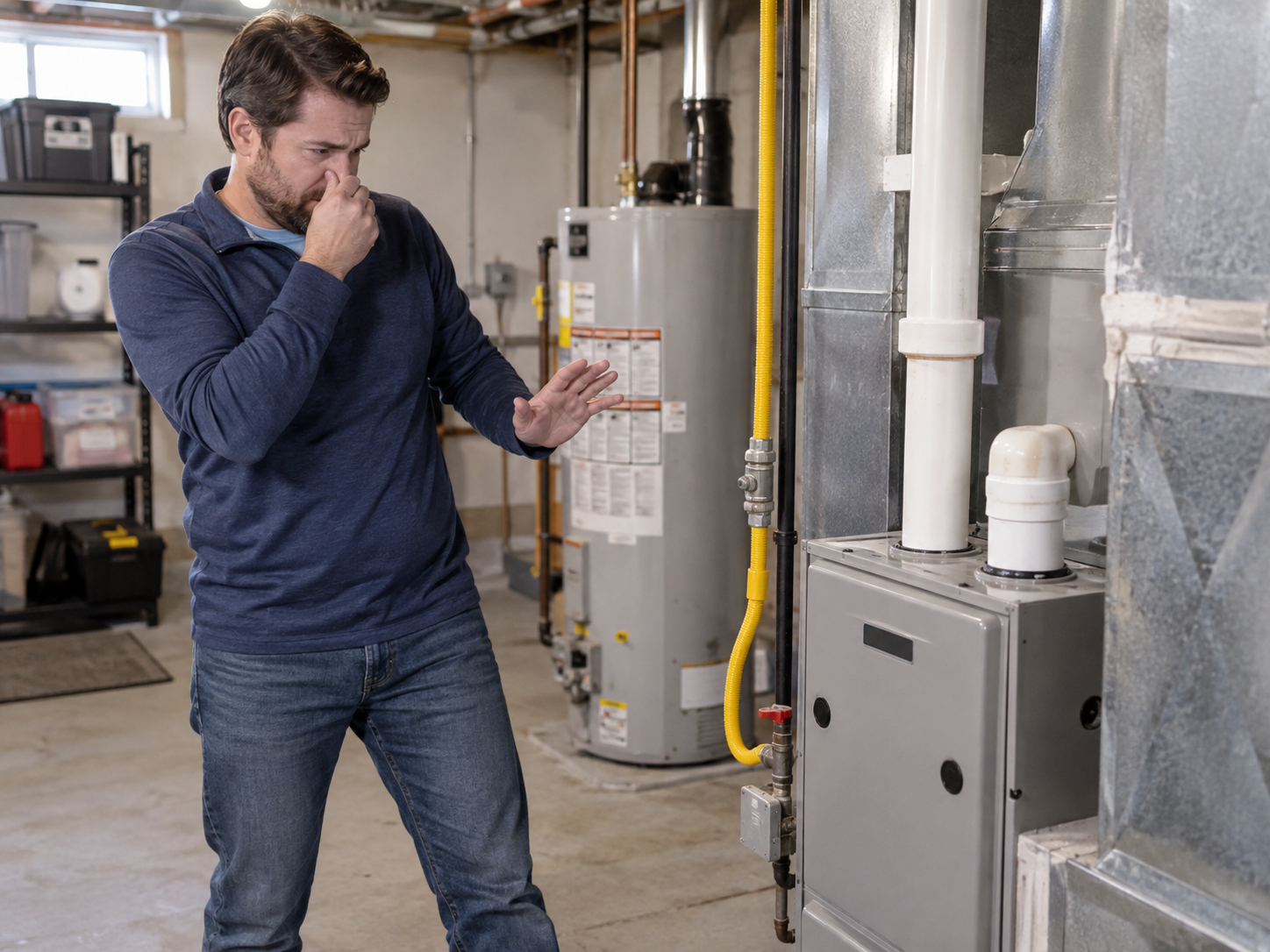
It is never appropriate to handle a gas odour as a typical HVAC issue.
Do not attempt to find the leak or fix the equipment yourself if you detect a strong gas odour next to a furnace or other gas-burning appliance. Observe the proper safety protocols and get in touch with the right emergency agency or certified expert.
2. You Notice a Burning Electrical Smell
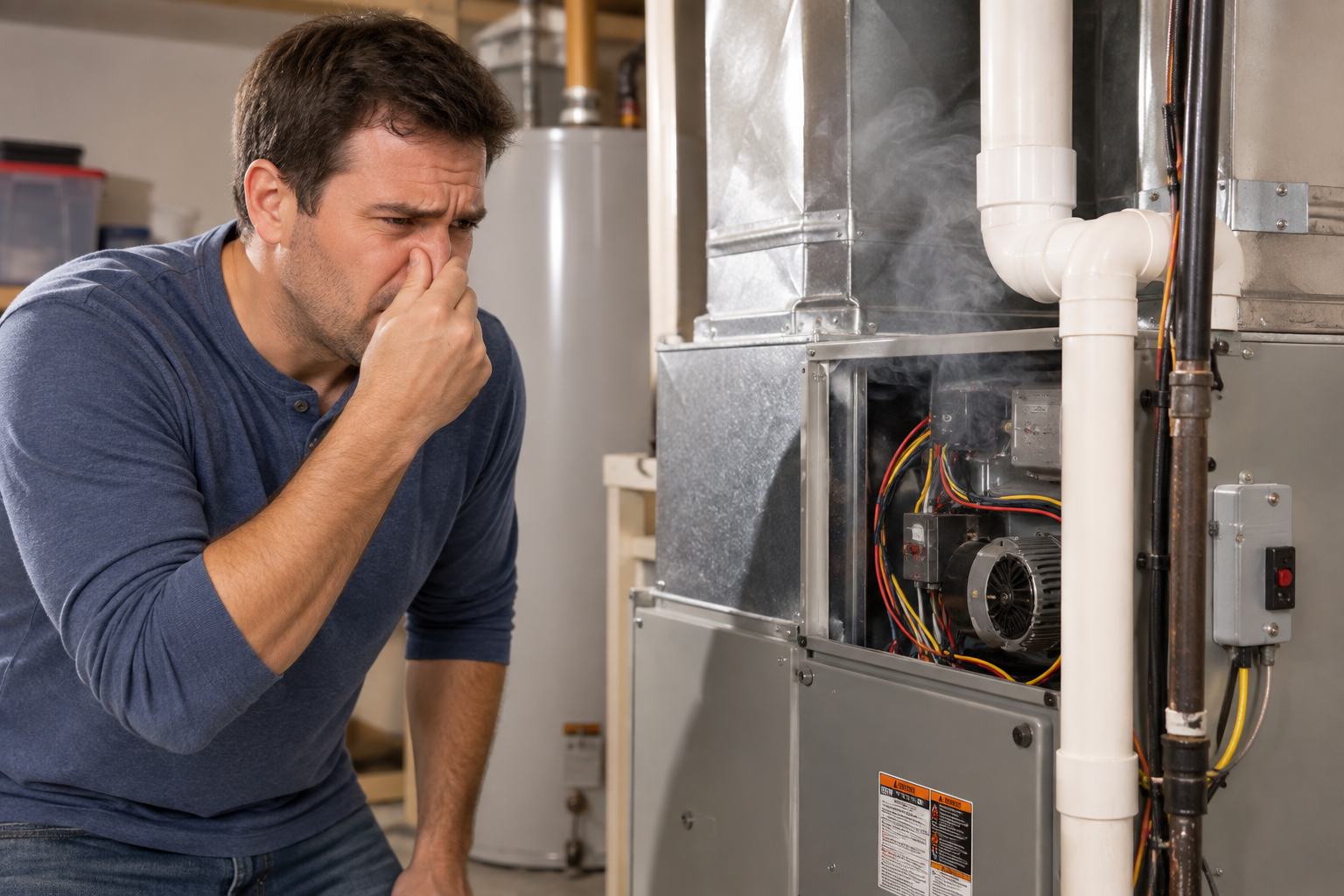
A burning smell from an HVAC system might suggest an electrical or mechanical issue.
If the odor is intense or comes with smoke, sparks, or odd electrical behavior, cease using the equipment if it's safe and seek expert assistance.
Electrical issues can escalate rapidly into dangerous situations, making it inappropriate to experiment with fixes.
3. Your HVAC System Is Causing Significant Water Damage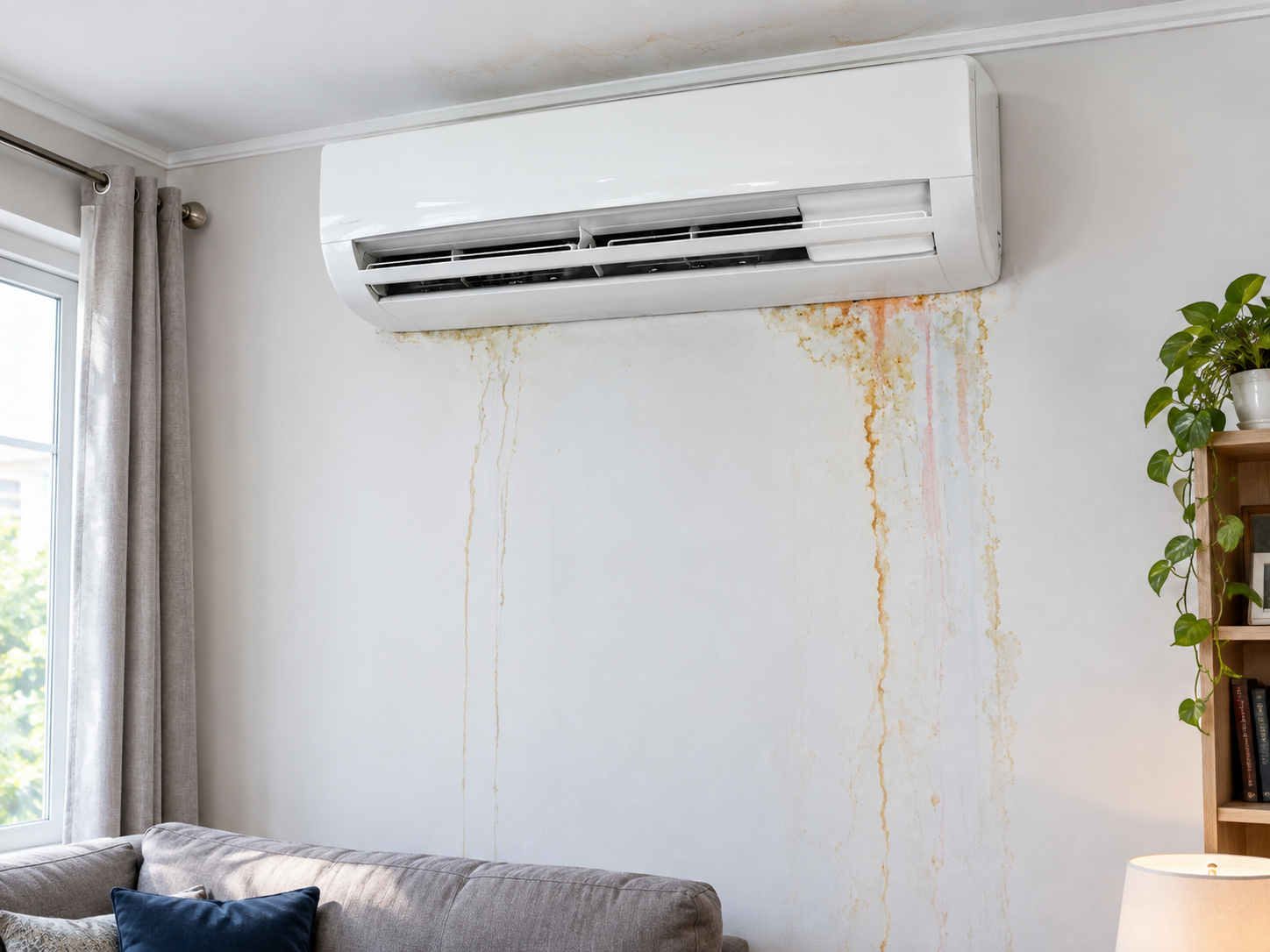
A small amount of condensation around an air conditioner is not necessarily an emergency. A substantial water leak is different.
Water from an HVAC system can damage flooring, walls, ceilings and other parts of the home if the source is not addressed.
If water is actively spreading or reaching electrical components, treat the situation as urgent and avoid contact with electrical equipment.
4. Your Furnace Stops Working During Severe Cold
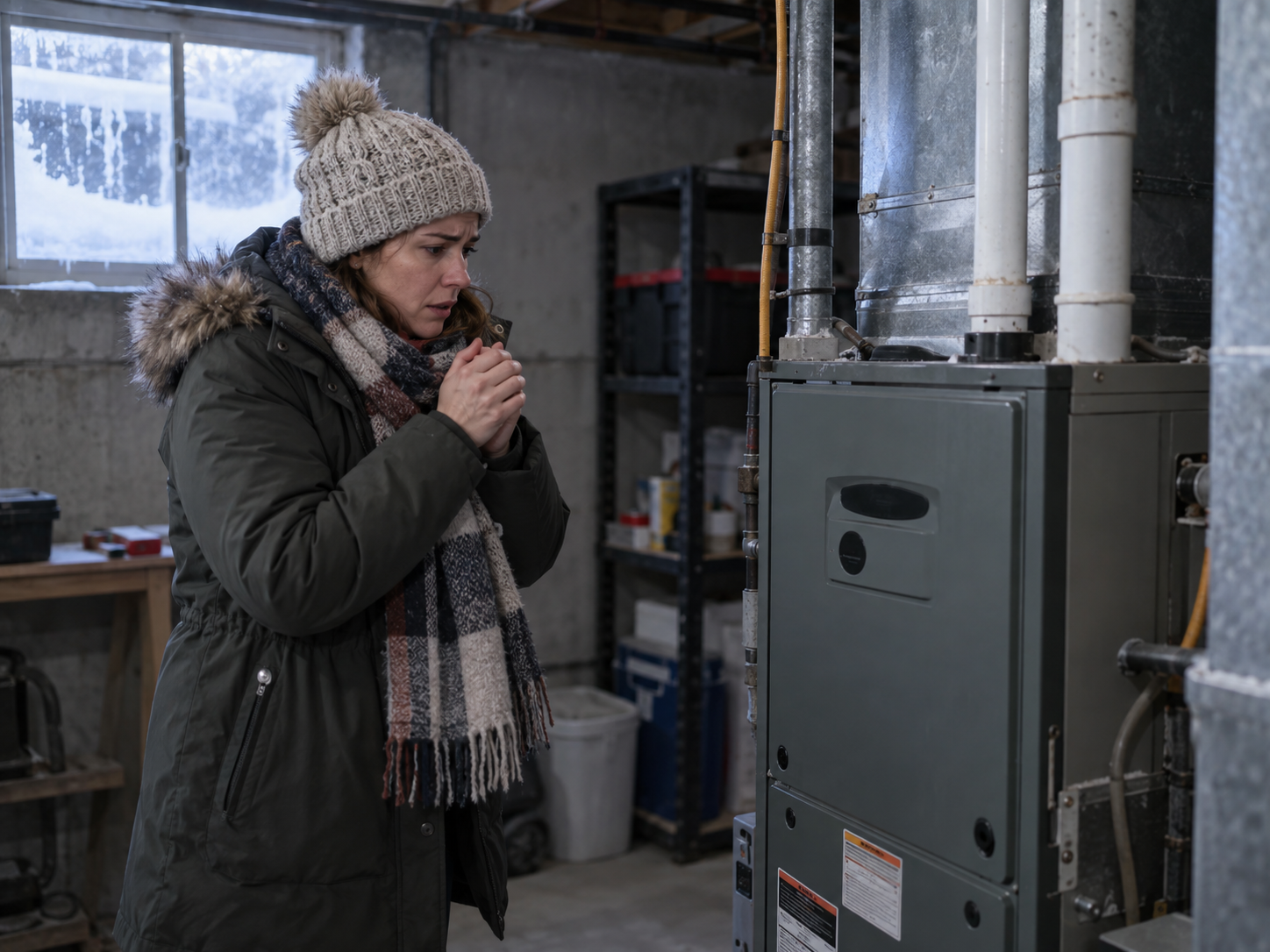
When the outside temperature is dangerously low, furnace failure becomes more important.
Without heat, a house can rapidly become uncomfortable. Prolonged heat loss in extreme circumstances can potentially put pipes and sensitive occupants at danger.
Get in touch with an HVAC specialist right once if your heating system stops working entirely during extremely cold weather.
5. Your AC Stops Working During Extreme Heat
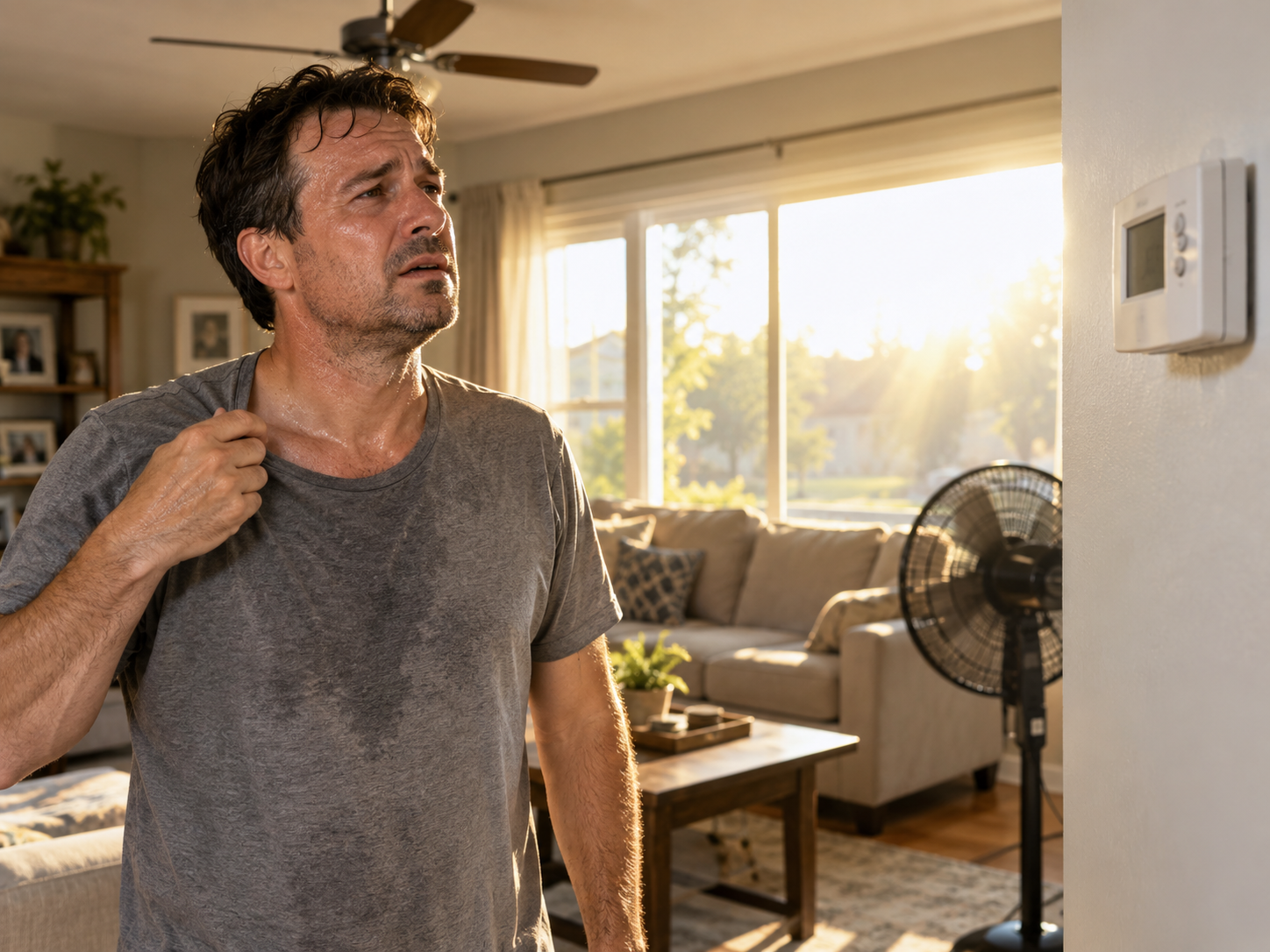
A failed air conditioner is not automatically an emergency. However, extreme outdoor temperatures can change the situation.
If your home becomes dangerously hot, especially when children, older adults or people with certain health needs are present, getting professional help quickly may be important.
6. Your System Produces Smoke or Severe Burning Odors
A broken air conditioner does not necessarily constitute an emergency. Nonetheless, extreme outdoor temperatures can alter the circumstances.
If your house becomes excessively warm, particularly when children, senior citizens, or individuals with specific health requirements are around, seeking professional assistance promptly might be crucial.
7. The HVAC Problem Is Creating an Immediate Safety or Property Risk
Sometimes the problem does not fit neatly into a category.
If the system is behaving unpredictably, causing significant damage or creating conditions that could put people or property at risk, professional evaluation should take priority over waiting for a convenient appointment.
Not Sure How Urgent Your HVAC Problem Is?
A strange noise, weak airflow or sudden loss of heating or cooling can leave you wondering whether you should wait or call for help. Connect with local HVAC professionals who can help assess the situation and determine the right next step for your home.
Routine vs. Emergency HVAC Repair: A Quick Homeowner Checklist
When you're standing in your living room trying to figure out what to do, run through these questions:
-
Is there a burning smell, smoke, or gas? This is an emergency if the answer is yes.
-
Is there a smoke or carbon monoxide alarm going off? If so, go outside and dial 911 first.
-
Is there visible water, sparking, or arcing near electrical components? If yes, this is an emergency.
-
Is the temperature in your house getting to the point where it's dangerous for the occupants or pets? If so, handle this urgently.
-
Is the system still running, just not performing quite right? This is very likely routine.
-
Has the issue been slowly developing over days or weeks rather than appearing suddenly? This usually points to routine repair.
Answering these honestly takes the guesswork out of a stressful moment and helps you avoid both extremes, overpaying for urgency you don't need or waiting too long on something that actually matters.
What Happens If You Ignore an HVAC Emergency
Being straightforward about this matter is important. Disregarding genuine warning indicators, such as a gas odor or a activated carbon monoxide detector, is not merely a matter of comfort. As stated by the U.S. Consumer Product Safety Commission, exposure to carbon monoxide leads to thousands of emergency room visits each year, with heating devices being a primary source in households. This is not the type of risk for which delaying until a better moment is advisable.
Less extreme circumstances can escalate if not addressed promptly. A small water leak by your furnace can cause rust, electrical issues, or mold development. An unaddressed short-cycling system can quickly deteriorate parts, transforming a regular repair into a significantly larger expense later on.
The aim isn't to fret about every odd sound your system generates. It’s important to identify the few indicators that truly require immediate attention, while feeling assured about treating the others as regular maintenance.
When to Call HVAC Repair vs. Wait for a Scheduled Appointment
Understanding Routine vs. Emergency HVAC Repair can help you decide whether a problem needs immediate attention or can wait for a scheduled appointment.
Here's the honest, no-chart-needed version. If you're smelling gas, watching sparks, or staring at water pooling near your electrical panel, you already know the answer. Stop reading this and call. That's not really a judgment call at that point.
Most situations aren't that clean, though. Say your furnace dies and it's 38 degrees outside, not exactly a blizzard, but not nothing either. That's usually where people get stuck, because the problem doesn't scream emergency, but it also doesn't feel like something you can just shrug off until Thursday.
A decent rule of thumb: if the system's still running, even if it's running badly, and nobody in the house is in real discomfort or danger, you can usually wait for a normal appointment. If it's fully down and the weather's working against you, that's when it's worth paying a bit more to get someone out sooner rather than later.
And honestly, if you're still not sure which camp you're in, just call and describe what's happening. Most technicians can tell within a couple minutes on the phone whether this is a come-now situation or a we'll-see-you-Thursday one. You don't have to diagnose it yourself first.
If your gut's telling you something's actually wrong tonight, trust that. Get matched with a local HVAC professional through Easy Home Service and get a straight answer on what your home needs right now.
How Easy Home Service Helps You Figure This Out
This is exactly the gap Easy Home Service exists to close. You're not an HVAC technician, so asking you to self-diagnose whether something is "bad enough" to call in tonight isn't fair, and most people either panic and overpay or wait too long and make things worse. Instead of guessing alone, you can describe what's happening and get matched with a local HVAC professional who can tell you, in a few minutes, whether this is a tonight problem or a this-week problem. No searching through review sites at midnight, no calling five different companies to compare who can actually come out. Just a straight answer from someone who knows what they're looking at, so you can stop second-guessing and start dealing with the actual problem.
Final Thoughts
Learning to tell the difference between routine vs. emergency HVAC repair isn't about becoming an expert overnight. It's about recognizing a small set of clear warning signs, gas smells, burning odors, carbon monoxide alarms, sparking, or dangerous indoor temperatures, and understanding that everything else usually has a little breathing room.
That knowledge protects your home, your family, and your wallet. And when a situation does call for urgent HVAC repair, having a reliable way to reach a professional quickly makes all the difference.
Need HVAC Repair? Get Connected With Local Professionals
Whether your HVAC issue needs immediate attention or a scheduled repair, getting the right professional involved can help you understand the problem and your options. Take the next step and connect with local HVAC professionals for your home.
Frequently Asked Questions
It depends on the level. If your air conditioning fails during a heat wave with young children, elderly family members, or pets in the home, that's Level 2, call promptly. If the weather is mild and everyone in the household is otherwise safe, it's usually Level 3, fine to schedule within a day or two.
Emergency HVAC service applies when safety is at risk: gas odors, burning smells, carbon monoxide alarms, sparking, or standing water near electrical components. No heat in freezing weather or no AC in extreme heat also typically qualifies. (34 words)
Routine HVAC maintenance typically includes filter replacement, coil cleaning, checking refrigerant levels, inspecting electrical connections, testing the thermostat, lubricating moving parts, and verifying airflow, all aimed at preventing breakdowns before they happen.
Homeowners insurance usually covers HVAC replacement only when damage results from a covered peril, like fire, lightning, or storms. Normal wear and tear, age-related failure, or lack of maintenance are typically excluded from coverage.
Run through the 3-level checklist. No gas smell, no smoke, no sparking, no carbon monoxide alarm, no freezing temperatures, and no dangerous indoor temperature usually means Level 3, safe to wait until morning. Anything involving a smell, alarm, or visible hazard is Level 1, and freezing pipe risk or extreme temperature is Level 2.







Leave a Comment: