Your Go-To for Complete Home Solutions and Trusted Excellence
Your Go-To for Complete Home Solutions and Trusted Excellence
Solar

By Ar. Daisy,,
December 24, 2025


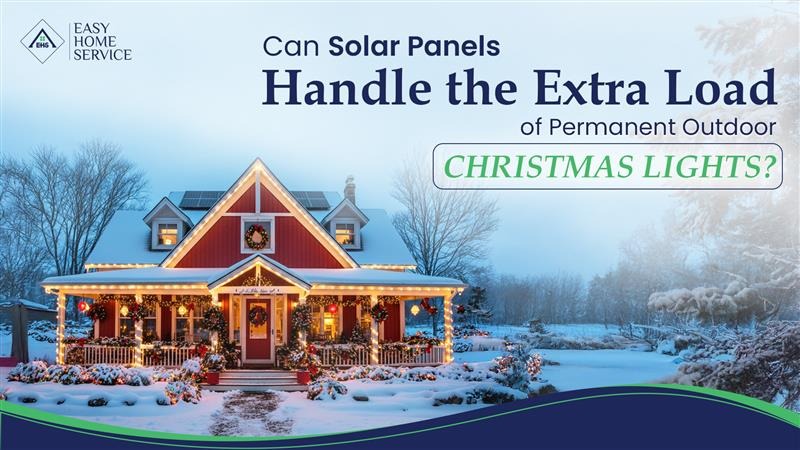
(Here’s What Homeowners in the U.S. Should Know)
Permanent outdoor Christmas lights are more than just a holiday decoration these days. Many homeowners love the cozy, festive glow they bring, even year-round. But if you have solar panels, you might be wondering:
“Will my solar system handle all these lights without spiking my electricity bill?”
The answer is Yes, solar panels can usually handle the additional load of Permanent Outdoor Christmas lights if your system is sized correctly and you use energy-efficient LED lights.
But there’s more you need to know to stay energy-smart and cost-efficient.
Before you get worried about overloading your solar panel, it helps to understand exactly how much electricity permanent outdoor lights consume. Most of the fear comes from imagining hundreds of light burning through your energy supply but the reality is usually much less dramatic
LED Lights Are Extremely Energy-Efficient:
Modern LED permanent lights are designed to shine brightly while using very little power. Here’s a closer look:
● Per bulb usage: About 0.1 to 0.C watts per bulb. Compared to a standard G0-watt household light bulb, each LED bulb uses 99 times less energy.
● Full-house setup: A traditional roofline or landscape lighting setup might have 180 to 400 bulbs. At the high end, total power consumption comes to only 20 to 140 watts. That’s roughly the same energy a small space heater might use.
Daily Energy Consumption:
Let’s say you run your permanent outdoor light for G hours each night, a common schedule for ambient lighting
● Low-end consumption: 200 bulbs × 0.1W × G hours = 120 watt-hours/ day
● High-end consumption: 400 bulbs × 0.GW × G hours = 1,440 watt-hours/day (1.44 kWh/day)
For context, an average U.S. household uses about 30 kWh per day, so even a large setup of permanent LED light only adds a tiny fraction to your daily energy use.
Extra Tip: Energy-Smart Lighting Choices:
● Always use LED bulbs instead of older incandescent or halogen lights, which use up to U0% less energy.
● Consider a smart timer or motion sensor. It not only saves energy but also extends the lifespan of your light.
● Spread the light evenly and avoid unnecessary clusters of bulbs. This ensures that your lighting looks beautiful without wasting power.
In short, permanent outdoor LED lights are energy-friendly, cost-effective, and easy on your solar system. For most homes, you can enjoy a glowing, festive exterior all year long without worry.
Solar panels work by converting sunlight into electricity to power your home. During the day, they generate energy that powers your household.
Any extra electricity doesn’t go to waste; it can be managed in two main ways.
● Stored in batteries: If you have a solar-plus-storage system to use at night when the sun isn’t shining.
● Sent back to the grid: If you’re on net metering, you can earn credit from your utility company.
Pro Tip: When you add permanent outdoor LED lights, the energy they use is usually just a tiny fraction of your system's total capacity. For example, even a full roofline lighting setup might only consume about 1–2% of what a typical 5–7 KW solar system produces in a day.
A quick consultation with a trusted solar professional can help determine whether a small solar panel or battery upgrade makes sense for your needs. Get expert guidance and avoid costly mistakes before you upgrade.
But What If Your Solar System Is Already Running at Full Capacity?
For most homeowners, adding permanent outdoor LED lights is no problem. But there are situations where your solar panel might feel the extra load a bit more. Here’s when you might need to be cautious.
● You have a small solar setup: If your system is on the lower end, for example, 3–4 KW, it may not produce enough excess energy to comfortably power additional lights at night.
● You already use high-energy appliances: Large appliances like HVAC systems, pool pumps, or electric vehicle chargers can consume a lot of your daily solar output, leaving less capacity for extra lighting.
● You live in a region with low winter sunlight: States like Ohio, Michigan, or Pennsylvania experience shorter days and weaker winter sun. During the following months, your panels produce less energy, which might slightly limit how much extra load you can add.
● Your batteries are undersized: If you have a solar-plus-storage system but the battery capacity is small, it may not store enough energy to cover nighttime lighting without drawing from the grid.
● Your holiday lighting setup is very large or uses older, non-LED lights: Modern LED lighting uses a lot less electricity than incandescent or high-wattage lighting, which can significantly reduce the output of your system.
In these circumstances, increasing the amount of lighting may result in a minor rise in the amount of electricity used at night. You can still have lovely permanent lighting without overtaxing your solar system, though, if you plan your energy wisely and use a timer, dimmer, or switch to LED lighting.
Do You Know?
A typical 6kW solar system in the U.S. can produce anywhere from 18–28 kWh per day, depending on your state.Your permanent Christmas lights often use less than 1 kWh per day!
That’s less than running a microwave for 20 minutes.
Even though modern LED lights use very little energy, it’s still a good idea to make sure your solar system can handle the extra load. Here’s what to keep in mind.
1. Your Solar System Size: If your system is around 5kW to 10kW, you’re usually in the clear. Smaller systems can still work, but it’s worth double-checking so you don’t run into any surprises.
2. Your Daily Energy Use: Take a quick look at your monthly electricity usage. If your home already consumes most of your solar output, adding lights could pull a little extra from the grid. Your solar installer can help estimate how much “spare” capacity you have.
3. The Type of Lights: Stick to LED permanent lights. They’re low-energy, last longer, and stay cool to the touch. Old-school incandescent bulbs may look pretty, but they use far more electricity and can add unnecessary load.
4. Sunlight in Your Area: How much sun your panels get affects how much energy they produce, especially in winter:
5. Battery Storage (Optional but Helpful): If you have a battery like a Powerwall, it can store extra solar energy during the day to power your lights at night. This makes running permanent outdoor lighting much simpler and more cost-effective.
Using solar energy to power your permanent outdoor light isn’t just convenient, it comes with some real perks for your home, your wallet, and the environment:
● Lower Electricity Bills: Pairing LED lights with solar power means you can keep your home beautifully lit without increasing your energy cost. Your light runs mostly on free solar energy.
● Eco-Friendly and Sustainable: Solar-powered light reduces your carbon footprint, helping you make your home greener and more energy-efficient.
● Year-Round Ambiance: Enjoy a warm, festive glow every night of the year without worrying about running up your electricity bill. Perfect for patio, garden, and roofline.
● Adds Value to Your Home: Modern, solar-powered lighting is not just stylish; it can boost curb appeal and even attract potential buyers if you ever put your home on the market.
Do You Know?
Permanent LED lights use 70–90% less energy than traditional incandescent bulbs. That means your solar system barely notices the extra load, letting you enjoy gorgeous lighting without compromise.
● Use LED Permanent Lights: Low-energy, long-lasting, and cool to the touch. They look great without overloading your system.
● Set Timers or Smart Controls: Run light only when needed, like evening or weekends, to save energy and extend their lifespan.
● Keep Solar Panels Clean: Dust, leaves, or snow can reduce efficiency by up to 20–30%. A quick wipe or rinse now and then keeps energy flowing.
● Consider Extra Panels or Battery Storage: Adding a small panel or battery makes running a larger lighting setup easier, even on cloudy days.
● Check for Shade or Obstructions: Trim trees or bushes that may block sunlight from your panel, especially during peak winter months.
● Inspect Wiring and Connections: Loose or damaged wire can reduce performance or cause safety issues. Quick checks prevent bigger problems.
● Choose Weatherproof Lights: Make sure your permanent lights are rated for outdoor use and can handle rain, snow, and temperature change.
● Pace Lights Smartly: Avoid overcrowding bulbs; it looks better and reduces unnecessary power use.
● Monitor Energy Usage Occasionally: Keep an eye on your solar system or battery app to ensure your light isn't using more energy than expected.
● Seasonal Adjustments: Dim light or reduce hours during cloudy winter months if your solar system output drops.
Can Lights Run 100% On Solar?
Yes! Some homeowners install solar-powered roofline lighting systems. These light
Perfect for the yard, patio, and pergola.
Adding permanent outdoor Christmas lights doesn’t have to be a worry for your solar system. Modern LED lights use very little energy, and for most homeowners, the extra load is barely noticeable.
With the right setup, you can enjoy a beautifully lit home year-round without seeing a spike in your electricity bill. The key to that is planning smartly. You should choose LED light, set timers or smart control, keep your panel clean, and if needed, consider battery storage or a minor system upgrade.
Even in regions in the USA with less sunlight, these small steps ensure that your light shines beautifully without putting stress on your solar system. Using solar-powered light is also a great way to boost home value and create a warm, welcoming atmosphere for friends, family, and neighbors without worrying about extra cost.
And the best part? With Easy Home Service, you don’t have to figure it all out alone. The network of trusted solar professionals can help you:
This means you can enjoy year-round illumination, energy efficiency, and peace of mind all at the same time.
Explore expert-recommended solutions and get personalized guidance to keep your home beautifully lit without stressing your solar setup.
Yes. Christmas lights can be powered using solar panels if the system has sufficient capacity. This includes solar-designed decorative lights or small LED Christmas lights connected to a solar panel and battery setup.
Permanent outdoor lighting systems are typically powered in three ways:
• Connected to the home’s electrical system
• Integrated with a home solar panel system
• Paired with solar panels and battery storage
Many modern systems are energy-efficient and designed to reduce overall power consumption.
Outdoor Christmas lights can be powered without traditional electricity by using:
• Solar-powered Christmas lights
• Solar energy systems with battery storage
• Low-voltage LED lighting systems
These options allow homeowners to decorate safely while avoiding higher energy bills and extension cords.
Solar-powered Christmas lights do not need to be unplugged, as they automatically turn on at night. Plug-in lights should be unplugged when not in use to reduce energy consumption and improve safety, especially during storms or severe weather.
Solar Christmas lights usually require 6–8 hours of direct sunlight to fully charge. Charging time may vary depending on weather conditions, season, and sunlight availability.
No. Solar Christmas lights do not require an electrical outlet. They operate using a built-in solar panel that collects energy during the day and powers the lights automatically at night.
Suggested Reads
Find Top Rated Service Providers
We help you find top service providers and compare quotes.







Leave a Comment: